New Orchid Species Indonesia: 10 Discoveries by BRIN
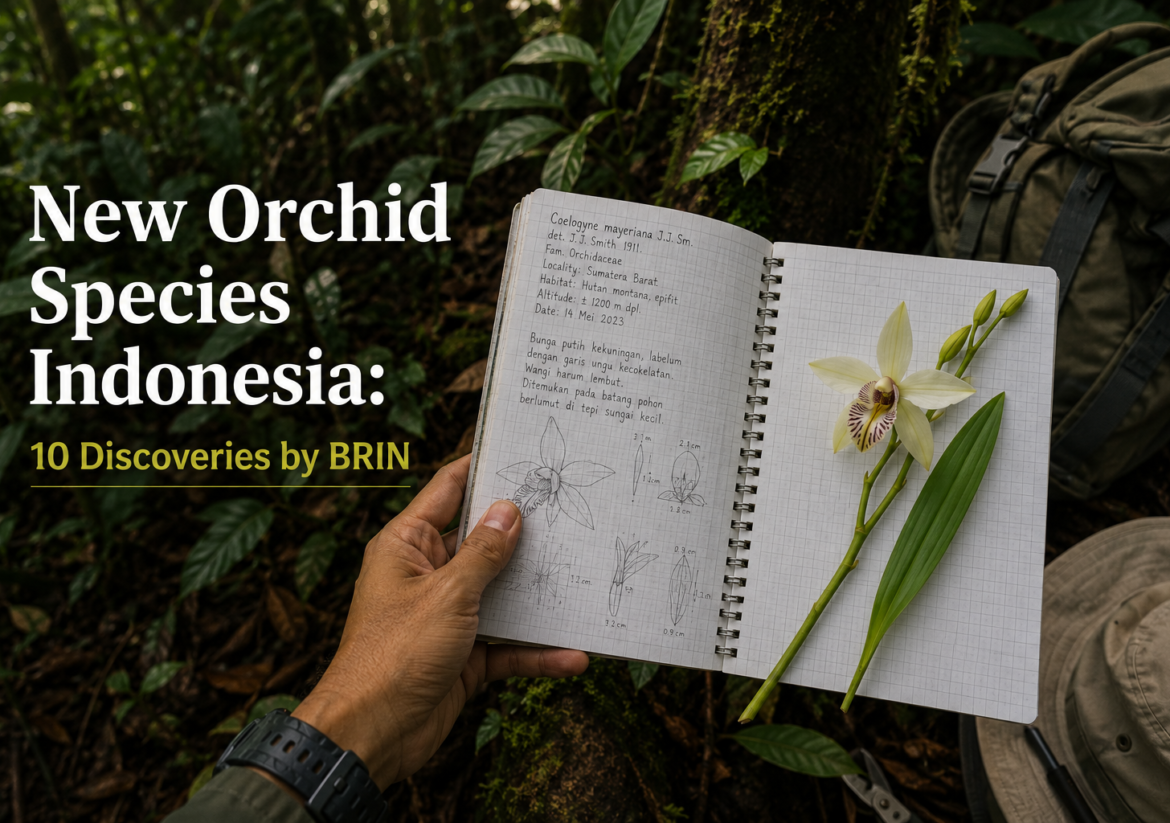
Indonesia has once again proven itself to be one of the world’s greatest orchid biodiversity hotspots. The National Research and Innovation Agency (BRIN), through its Centre for Biosystematics and Evolution Research (PRBE), has officially reported the discovery of 10 new orchid species in Indonesia — a landmark scientific achievement that reminds the world just how much of this archipelago’s natural wealth remains undocumented.
For plant lovers, aquascapers, and nature enthusiasts alike, this is extraordinary news. The same wild forests of Borneo, Sulawesi, and Sumatra that give us the rare aquatic jungle plants we treasure are still hiding secrets that science is only beginning to uncover.
A Discovery Published in an International Scientific Journal
The findings were published in the prestigious international journal Lankesteriana, under the article “Ten New Orchid Records from the Indonesian Archipelago.” This was no solo effort — the research was the result of a major collaboration between BRIN and several key institutions:
- Yayasan Tumbuhan Asli Nusantara (Native Plants of the Archipelago Foundation)
- Yayasan Konservasi Biota Lahan Basah (Wetland Biota Conservation Foundation)
- Universitas Samudra
- Bromo Tengger Semeru National Park
This cross-institutional collaboration reflects the true spirit of conservation — science and preservation working hand in hand.
Four Years of Fieldwork Across the Indonesian Archipelago
These new orchid species in Indonesia were not stumbled upon by chance. The research team conducted intensive field explorations from 2020 to 2024, covering a remarkable stretch of the archipelago including Sumatra, Java, Borneo, Sulawesi, and Nusa Tenggara.
The process was meticulous — collecting specimens in the field, documenting plant morphology, preserving herbarium samples, and cross-referencing findings against national and international museum collections. The results were remarkable:
- 5 new species discovered in Sumatra
- 2 new species discovered in Java
- 1 new species in Borneo (Kalimantan)
- 1 new species in Sulawesi
- 1 new species in Nusa Tenggara
The Most Surprising Finds: From Papua and Australia — Now in Indonesia
Two discoveries from this research have genuinely surprised the scientific community:
Anoectochilus papuanus — previously known to exist only in Papua and the Solomon Islands, this species has now been recorded in East Java. A find that significantly rewrites what we knew about this species’ geographic range.
Dendrobium teretifolium — long considered an Australian native, this orchid has now been discovered growing in East Nusa Tenggara. Its presence here raises fascinating new questions about how plant species disperse across vast ocean distances.
Both discoveries prove that the distribution boundaries we thought we understood can still surprise us with every new expedition into Indonesia’s forests.
The Wallacea Zone: Indonesia’s Undocumented Orchid Treasure
According to BRIN researcher Aninda Reno Utami Wibowo, these findings send a powerful signal Indonesia, particularly the Wallacea zone and its eastern territories, still holds vast orchid wealth that remains undocumented.
The Wallacea region, encompassing Sulawesi, Nusa Tenggara, and Maluku, is one of the world’s most unique biogeographic transition zones — the meeting point of Asian and Australian flora and fauna. It is precisely this complexity that makes it such a rich ground for biodiversity research, and why new orchid species in Indonesia continue to emerge from this region.
What This Means for Plant and Nature Enthusiasts
For the global community of plant lovers — aquascapers, terrarium builders, and rare plant collectors — this discovery carries a deeper meaning:
- Indonesia’s botanical wealth is far greater than current records suggest
- Many endemic species are still waiting to be conserved and studied
- Borneo and eastern Indonesia remain among the most biodiverse places on Earth
At Borneo Aquatic, our love for aquatic jungle plants goes hand in hand with a deep respect for the wild ecosystems they come from. Every rare plant we source is a reflection of Borneo’s extraordinary natural heritage — one worth protecting for generations to come.