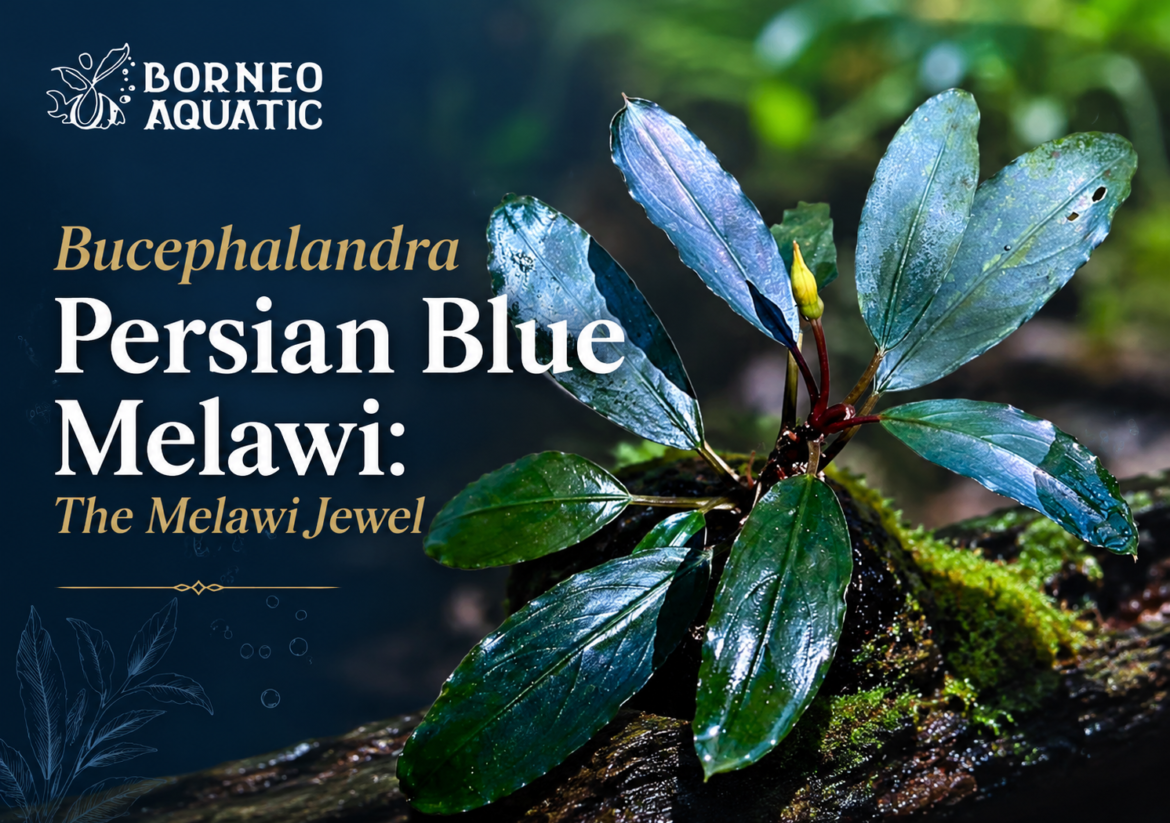
Bucephalandra Persian Blue Melawi: The Melawi Jewel
If you are interested in the Bucephalandra Persian Blue Melawi, you have come to the right place. That’s the nature of this rare clone; its reputation for unique coloration travels faster than supply. In this guide, we’ll walk through where this aquatic jewel actually comes from, how to keep it thriving in your tank, and what makes it a must-have for your layout.
The Origin of Bucephalandra Persian Blue Melawi
Bucephalandra Persian Blue Melawi is not just a marketing name; it’s a reflection of the specific region in West Kalimantan where this variant originates. These plants are naturally adapted to the humid, shaded riverbanks of the Melawi river system, often clinging to rocky crevices in fast-flowing, mineral-rich streams.
What separates a high-quality clone like Persian Blue from generic Bucephalandra stock is isolation. The specific water conditions and light levels in the Melawi region have produced a distinct population with a unique blue-tinted iridescence under the right lighting. At Borneo Aquatic, we’ve spent two decades farming rare aquatic plants directly from Borneo, which means our stock is grown under controlled conditions rather than wild-harvested better for the plant, and better for the river systems it calls home.
Bucephalandra Persian Blue Melawi Care Tips
Bucephalandra Persian Blue Melawi has a reputation for being slow and a little particular, but it rewards you with steady, compact growth and an incredible color display.
- Light: Low to moderate intensity is the safe range. Because it is an understory plant in the wild, harsh direct light can cause algae to grow on the rhizome.
- CO2: Not strictly required, but appreciated. While this plant will survive and slowly grow in low-tech setups, injecting CO2 will generally lead to faster growth and more intense, vibrant leaf coloration.
- Water Parameters: Stable, soft to moderately hard water with a slightly acidic to neutral pH suits this variant best. Consistent water quality matters far more than chasing an exact number.
- Placement: Like all Bucephalandra, it is rhizome-based and should never be buried in substrate. Attach it to hardscape driftwood or rock using thread or glue to avoid rhizome rot.
Why Buy Bucephalandra Persian Blue Melawi?
A few things push Persian Blue Melawi toward the top of collector wish lists:
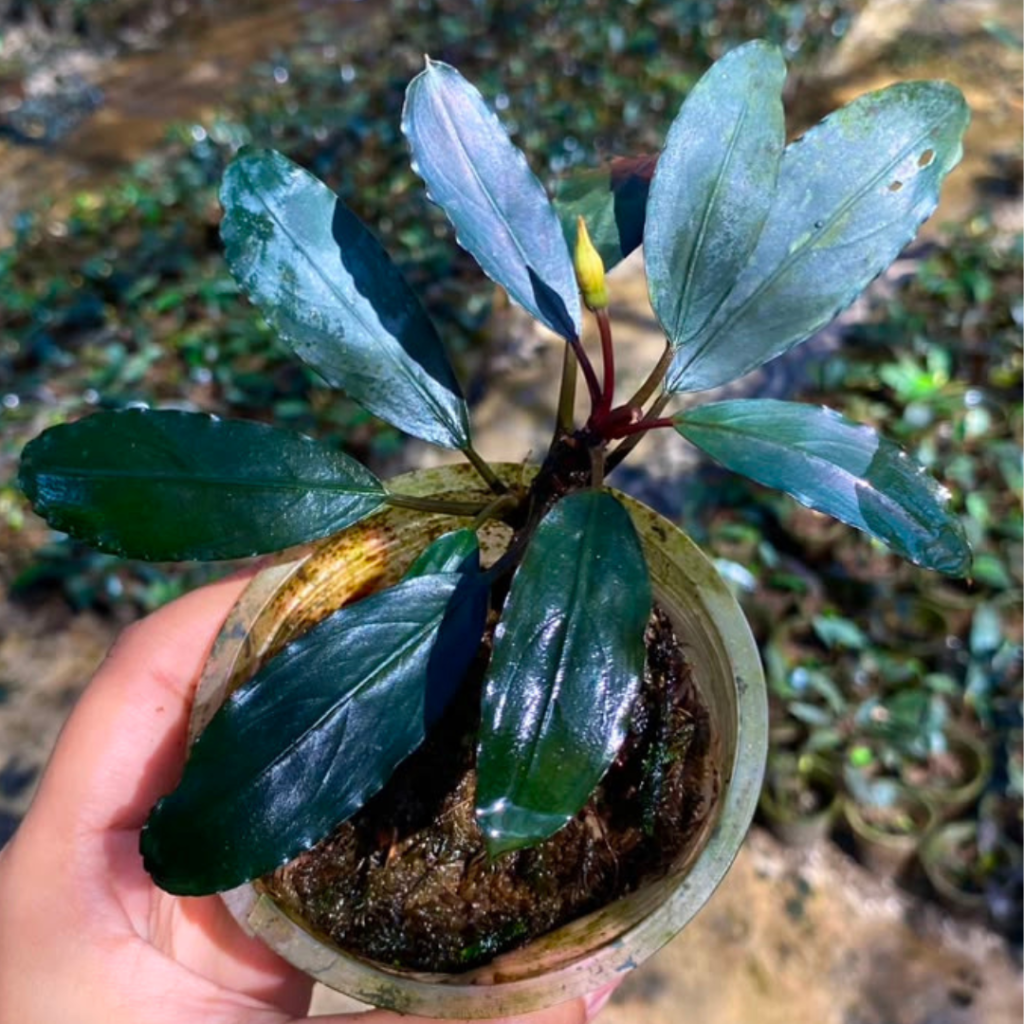
- Unique Coloration: It is named for the distinctive, soft blue sheen that appears on the leaves under proper aquarium lighting a trait rarely seen in common varieties.
- Compact Growth: This variant maintains a tight, defined leaf form, making it perfect for smaller details in a high-end aquascape.
- Traceability: Serious collectors know that provenance matters. Knowing a plant’s exact river origin rather than a vague “mix” label is part of what collectors are paying for.
Why Choose Borneo Aquatic?
We farm in Borneo, not just source from it. That distinction matters when you’re trying to buy Bucephalandra Persian Blue Melawi with confidence. Twenty years of hands-on cultivation means our stock is grown, inspected, and shipped from the region this plant calls home not relabeled from a generic batch.
FAQ
Is this variant difficult to keep?
Not particularly. Its care requirements are consistent with most Bucephalandra stable conditions and patience. The main difference is that growth is slow, so don’t expect rapid spread.
Can I grow it emersed?
Yes, many growers keep it successfully in paludariums and high-humidity emersed setups, as it naturally grows along riverbanks in both submerged and partially emersed conditions.
Ready to Add This Jewel to Your Collection?
Plants like this don’t sit in inventory for long. If you’ve been waiting for a genuinely traceable, high-quality Persian Blue Melawi to anchor your next layout, this is it.
- Shop our exclusive collection here: https://borneoaquatic.com/shop
- Explore more plant guides on our blog: https://borneoaquatic.com/blog
[OUTBOUND LINKS]
- Bucephalandra Genus Profile: https://en.wikipedia.org/wiki/Bucephalandra
- Aquatic Plant Conservation Study: https://www.iucn.org