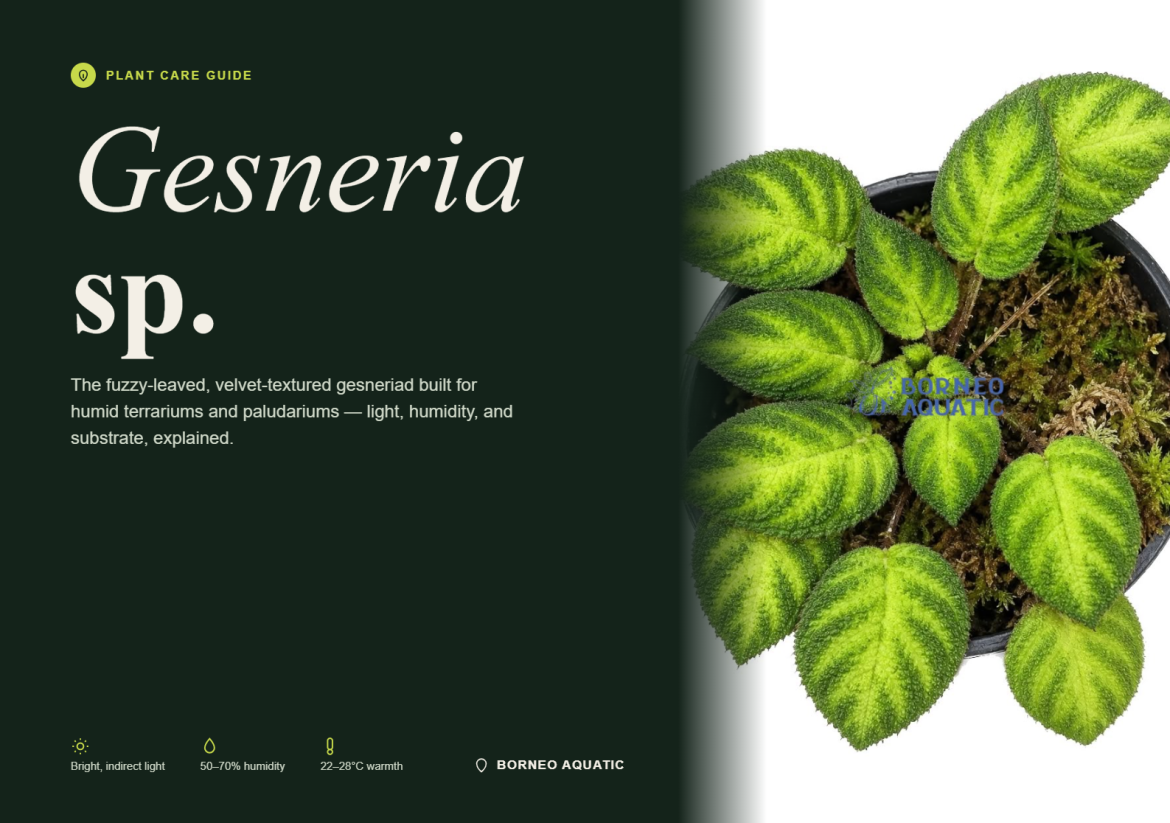
Gesneria sp. Care Guide: Growing This Fuzzy-Leaved Beauty in Terrariums
If you have ever come across a small pot of deeply veined, velvety green leaves at a terrarium show or an aquascape store, there is a good chance you were looking at Gesneria sp. This Gesneria sp. care guide walks through everything you need to know to keep this textured little gem thriving, whether it is tucked into a bioactive terrarium, a paludarium, or a humid plant cabinet.
What Is Gesneria sp.?
Gesneria is a genus within the Gesneriaceae family, the same tropical plant family that gave us African violets, Streptocarpus, and Episcia. Most gesneriads originate from humid tropical forests, and many species have adapted to low-light, high-humidity conditions on the forest floor or on moss-covered rocks and bark.
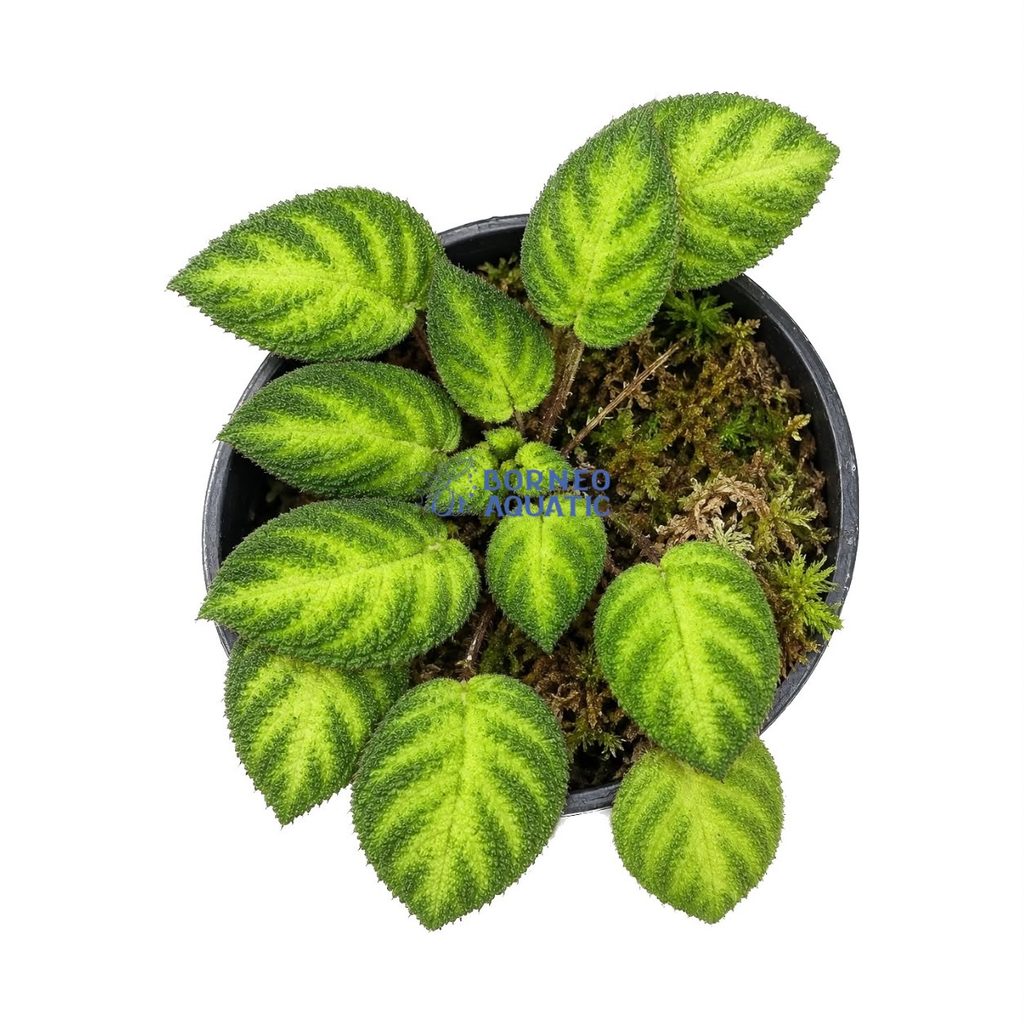
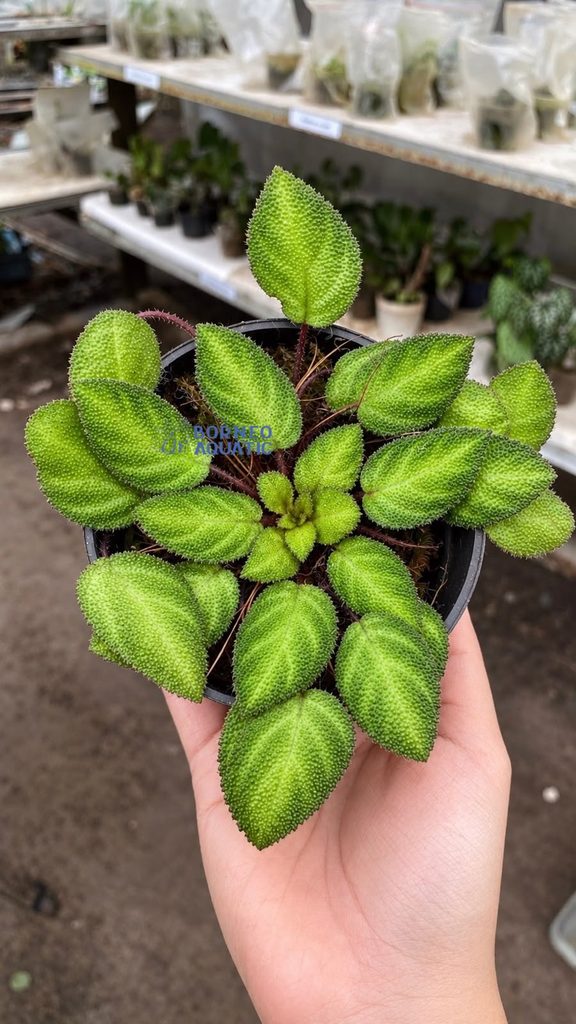
That background is exactly why Gesneria sp. has become such a popular pick among terrarium and paludarium keepers. Its compact rosette of fuzzy, deeply contrasted leaves adds texture and color without demanding a huge footprint, and it naturally enjoys the same still, humid microclimate that a closed terrarium provides.
Light Requirements for Gesneria sp.
Like most of its gesneriad relatives, Gesneria sp. prefers bright, indirect light rather than direct sun. In a terrarium or paludarium setup, this usually means placing it where it receives strong ambient light from an LED grow light for around 10 to 12 hours a day, while avoiding the hottest, most intense part of the fixture.
Too little light will cause the stems to stretch and the leaf color to fade, while light that is too strong or too close can scorch the delicate, hairy foliage. If you notice bleached or crispy leaf edges, it is usually a sign to move your Gesneria sp. slightly further from the light source.
Humidity and Temperature
This is where Gesneria sp. truly shines as a terrarium plant. Gesneriads in general do best at humidity levels of roughly 50 to 70%, and many foliage species, including Gesneria sp., prefer the higher end of that range — a level a closed or semi-closed terrarium or paludarium reaches naturally.
Warm, stable temperatures between 22 to 28°C (72 to 82°F) suit Gesneria sp. well, mirroring the tropical forest conditions it comes from. Avoid cold drafts and sudden temperature swings, which can stress the plant and slow new growth.
Substrate and Watering
Gesneria sp. wants a substrate that is light, airy, and moisture-retentive at the same time, never soggy or compacted. A mix of sphagnum moss, fine orchid bark, and a bit of leaf litter or coco fiber works well, which is also why growers commonly sell it already established in a moss-topped pot, ready for you to mount or plant into a terrarium layout.
Keep the substrate consistently moist but not waterlogged. In an enclosed terrarium with good humidity, misting every few days alongside the ambient condensation cycle is usually enough. In a more open paludarium setup, you may need to mist more frequently or add a light drip or misting system to prevent the root zone from drying out.
Placing Gesneria sp. in a Terrarium or Paludarium
Because of its compact growth habit, Gesneria sp. works well as a foreground to midground accent plant. You can plant it directly into a substrate pocket, nestle it into moss, or tuck it between hardscape pieces where it gets good airflow without sitting in standing water.
Give it a little breathing room from faster-growing neighbors, since taller plants can shade out its rosette form if they crowd in too quickly. Pairing it with mosses, small ferns, or low-growing epiphytes tends to create a natural, layered look while keeping each plant’s care needs compatible.
Common Issues When Growing Gesneria sp.
- Leaves curling or browning at the edges: usually too much direct light or humidity that has dropped too low.
- Leggy, stretched growth: a sign the plant needs more light.
- Soft, mushy stems or rot: substrate that stays too wet without enough airflow usually causes this.
- Slow growth with no new leaves: check that temperatures are not dropping too low at night, especially in an open-top setup.
Most issues with Gesneria sp. trace back to one of these three factors: light, humidity, or airflow, so adjusting one at a time makes it easier to pinpoint the cause.
Why Gesneria sp. Is Worth Growing
Beyond its good looks, Gesneria sp. is a rewarding plant because it genuinely thrives in the exact conditions a terrarium or paludarium provides. Rather than fighting against a houseplant’s preference for drier air, you are working with the plant’s natural habitat from the start, which tends to mean steadier, healthier growth with less troubleshooting over time.
If you want to add this textured, jewel-toned foliage plant to your own setup, you can find healthy, terrarium-ready specimens of Gesneria sp. and other aquatic and terrarium plants in our shop. For more background on gesneriad care across the wider family, the Gesneriad Society is a solid resource worth bookmarking.
Final Thoughts
Gesneria sp. is proof that some of the best terrarium plants are not the showiest bloomers, but the ones whose foliage alone earns a second look. Get the light, humidity, and substrate right, and this little gesneriad will reward you with dense, textured growth that holds its own in any humid planted display.
BORNEO AQUATIC Growing plants. Connecting people. Giving back to nature.