Buying Guide: Bucephalandra Kapit – The Rare Sarawak Collector’s Plant
If you’ve spent any time in serious aquascaping circles, you’ve probably heard collectors whisper about Kapit before they’ve ever seen it in person. That’s the nature of this clone reputation travels faster than supply. In this guide, we’ll walk through where Bucephalandra Kapit actually comes from, how to keep it thriving in your tank, and what makes it worth tracking down. By the end, you’ll understand exactly why hobbyists choose to buy Bucephalandra Kapit when it becomes available, and what to look for before you commit a spot in your scape to one.
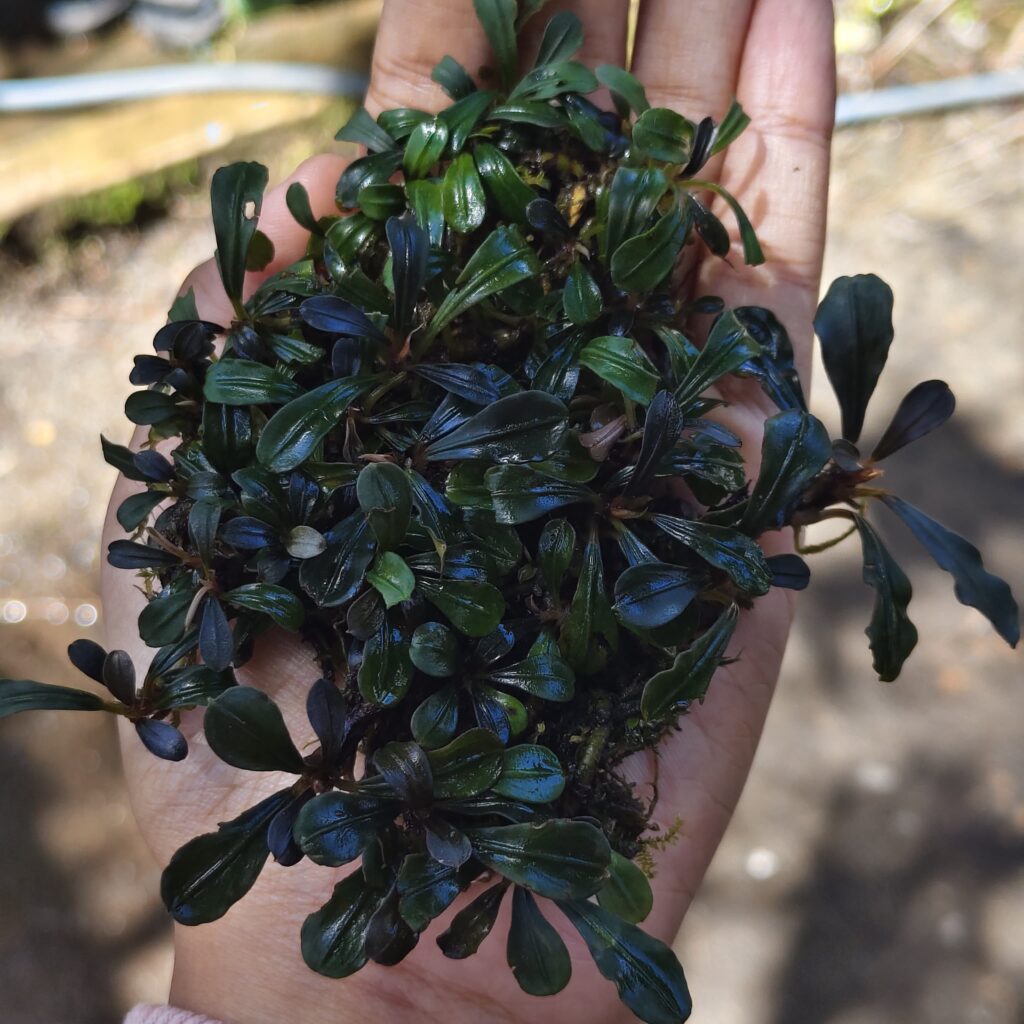
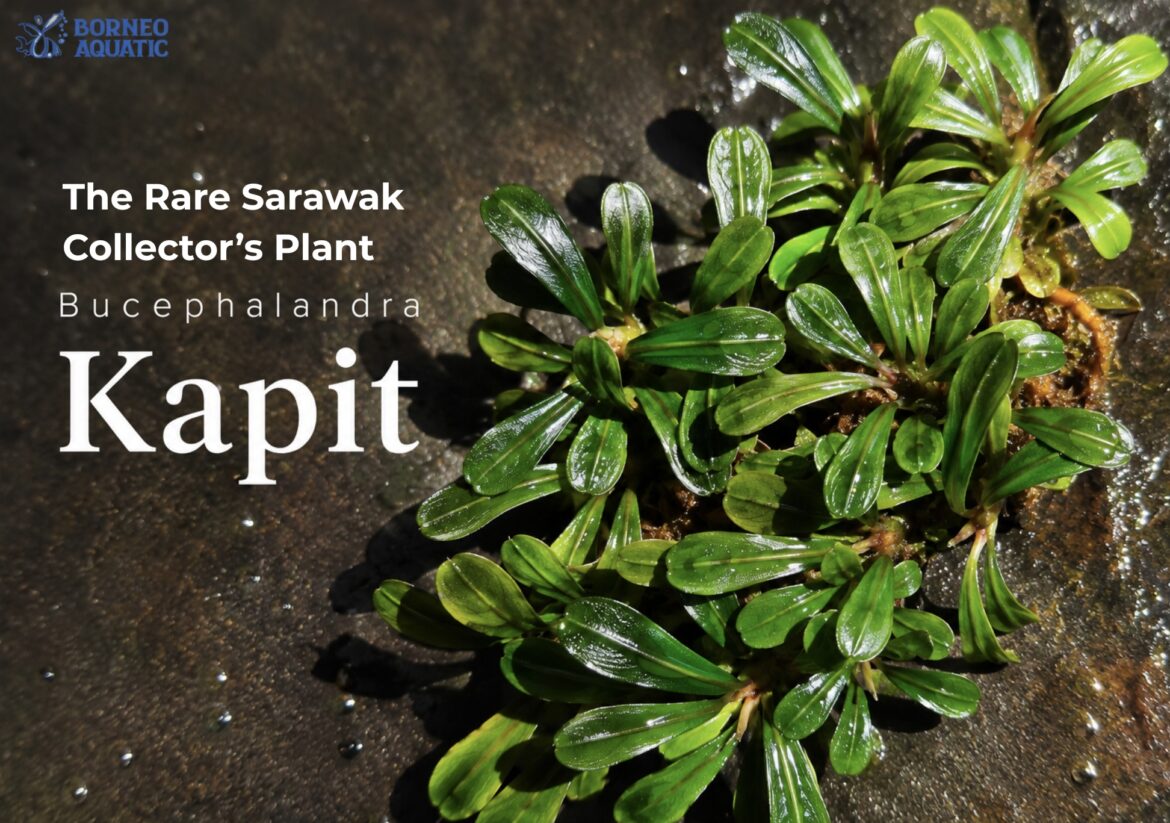
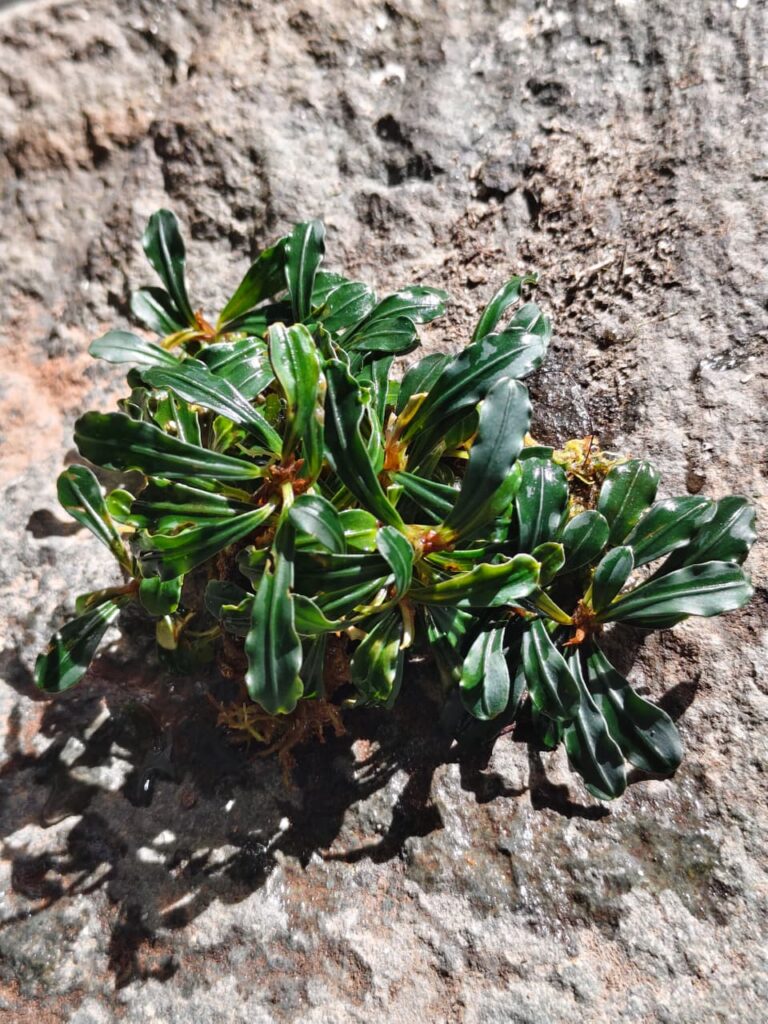
Show Image Bucephalandra Kapit grown at Borneo Aquatic — leaf texture and color saturation are part of what makes this clone collectible.
The Origin Story: Bucephalandra Kapit from the Heart of Sarawak
Kapit isn’t a marketing name it’s a place. The Kapit Division sits inland in Sarawak, Malaysian Borneo, along the upper reaches of the Rajang River system, one of the more remote and less-collected regions on the island. Bucephalandra grows here the way it does across much of Borneo: clinging to submerged and partially submerged rock in fast-flowing, mineral-rich streams, often tucked into riverbank crevices where seasonal flooding keeps the rhizomes anchored but the leaves in motion.
What separates a river-specific clone like Kapit from generic “Bucephalandra sp.” stock is isolation. Different river systems across Borneo have produced visually distinct populations over time — variation in leaf shape, color saturation, and growth habit that’s specific to that stretch of water. Kapit is one of those named, traceable variants, collected and identified from its native range rather than assembled or mislabeled for the trade.
At Borneo Aquatic, we’ve spent two decades farming Bucephalandra directly from Borneo, which means our Kapit stock is grown out under controlled conditions rather than wild-harvested at scale — better for the plant, and better for the river systems it comes from.
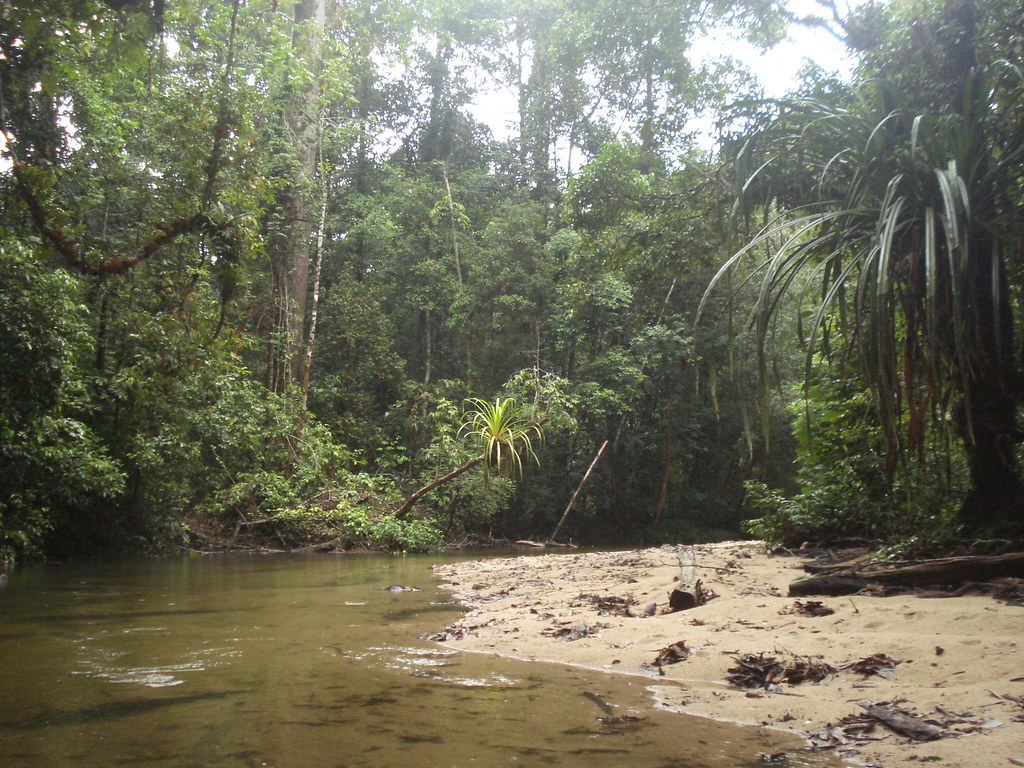
Show Image The river systems of the Kapit Division, Sarawak — native habitat of Bucephalandra Kapit and the source of our farmed stock.
Care Specs: Light, CO2, and Water Parameters for Bucephalandra Kapit
Bucephalandra has a reputation for being slow and a little particular, and Kapit is no exception. Get the basics right and it rewards you with steady, compact growth and strong leaf color.
Light: Low to moderate intensity is the safe range. Bucephalandra evolved growing on shaded riverbank rock under canopy cover, so it doesn’t want or need high-output lighting. Too much light, especially without adequate flow or nutrients to match, tends to show up as algae on the rhizome before it shows up as growth.
CO2: Not required, but appreciated. Kapit will survive and slowly grow in a low-tech, no-CO2 setup. Inject CO2 and you’ll generally see faster, more compact growth and better leaf coloration — but this is a plant you can keep without it if your tank is otherwise stable.
Water parameters: Soft to moderately hard water with a slightly acidic to neutral pH suits Bucephalandra well, reflecting the blackwater and clearwater stream conditions it grows in throughout Borneo. Stable temperature within a typical tropical community range, gentle to moderate flow, and consistent water quality matter more than chasing an exact number.
Placement and attachment: Like all Bucephalandra, Kapit is rhizome-based and should never be planted in substrate. Attach it to hardscape — driftwood or rock — using thread or glue, and keep the rhizome itself out of the substrate to avoid rot. Patience is part of the deal: this is not a fast grower, and that slow pace is exactly what gives it such tight, defined leaf structure over time.
Show Image Bucephalandra Kapit mounted on driftwood — the rhizome stays above the substrate, never buried.
Why This Clone Is So Collectible
A few things push Kapit toward the top of collector wish lists rather than leaving it as just another Bucephalandra variety on a shelf.
First, supply is genuinely limited. Kapit comes from a specific, remote river region, and propagation is slow by nature — rhizomes divide gradually, not in bulk. That scarcity is real, not manufactured for the listing.
Second, it has the qualities collectors look for in a Bucephalandra clone: distinct leaf form and a color response under light that’s visually different from the more common, widely circulated varieties already saturating the hobby. In a tank, it reads as something deliberately chosen rather than something picked up because it was the only Bucephalandra in stock.
Third, traceability matters to serious buyers. Knowing a plant’s river origin — rather than a vague “Bucephalandra mix” label — is part of what collectors are actually paying for. It’s the difference between buying a plant and buying a piece of a specific place.
This is exactly why demand consistently outpaces what we can offer whenever we list bucephalandra for sale from this particular river system, and why anyone serious about building a true Borneo-native collection keeps an eye out for it specifically rather than settling for a substitute.
Buying Bucephalandra Kapit from Borneo Aquatic
We farm in Borneo, not just source from it. That distinction matters when you’re trying to buy Bucephalandra Kapit with any confidence in what you’re actually getting. Twenty years of hands-on cultivation means our stock is grown out, inspected, and shipped from the region this plant calls home — not relabeled from a generic batch.
We also ship globally, and every export leaves Indonesia with the correct legal export documentation, with import requirements on the receiving end handled according to destination-country rules. For a rare aquascape plant Borneo collectors specifically want documented and clean, that paperwork isn’t a bonus — it’s the baseline.
FAQ
Is Bucephalandra Kapit difficult to keep compared to other Bucephalandra? Not particularly. The care requirements are consistent with Bucephalandra in general — low to moderate light, stable soft-to-moderate water parameters, and rhizome attached to hardscape rather than buried. The main difference is patience: growth is slow, so don’t expect rapid spread.
Can I keep Bucephalandra Kapit emersed or only fully submerged? Bucephalandra naturally grows along riverbanks in both submerged and partially emersed conditions in the wild, and many growers keep it successfully in paludariums and emersed setups, not just fully flooded tanks.
Why is Bucephalandra Kapit more expensive or harder to find than common varieties? It comes down to limited natural distribution and slow propagation. Kapit is specific to one river region in Sarawak, and Bucephalandra rhizomes divide gradually rather than producing fast bulk growth, which keeps supply tight relative to demand.
Ready to Add Kapit to Your Collection?
Plants like this don’t sit in inventory for long, and once a batch sells through, the next one depends entirely on how the rhizomes have grown out since the last harvest. If you’ve been waiting for a genuinely traceable, Sarawak-origin Bucephalandra to anchor your next scape, this is it. Shop Bucephalandra Kapit now → limited clumps available.