Borneo’s diverse ecosystems: a world unto itself
From dense interior rainforests to ancient peat swamps and the coral-rich seas at its shores, Borneo holds an unmatched range of ecosystems rarely found on a single island.
Borneo is famous for its terrestrial wonders — the orangutans, the dipterocarps, the cloud-shrouded peaks. However, beneath the surface of its rivers and swamps lies an equally astonishing world. It is a rich assemblage of aquatic plants that have evolved here for millions of years.
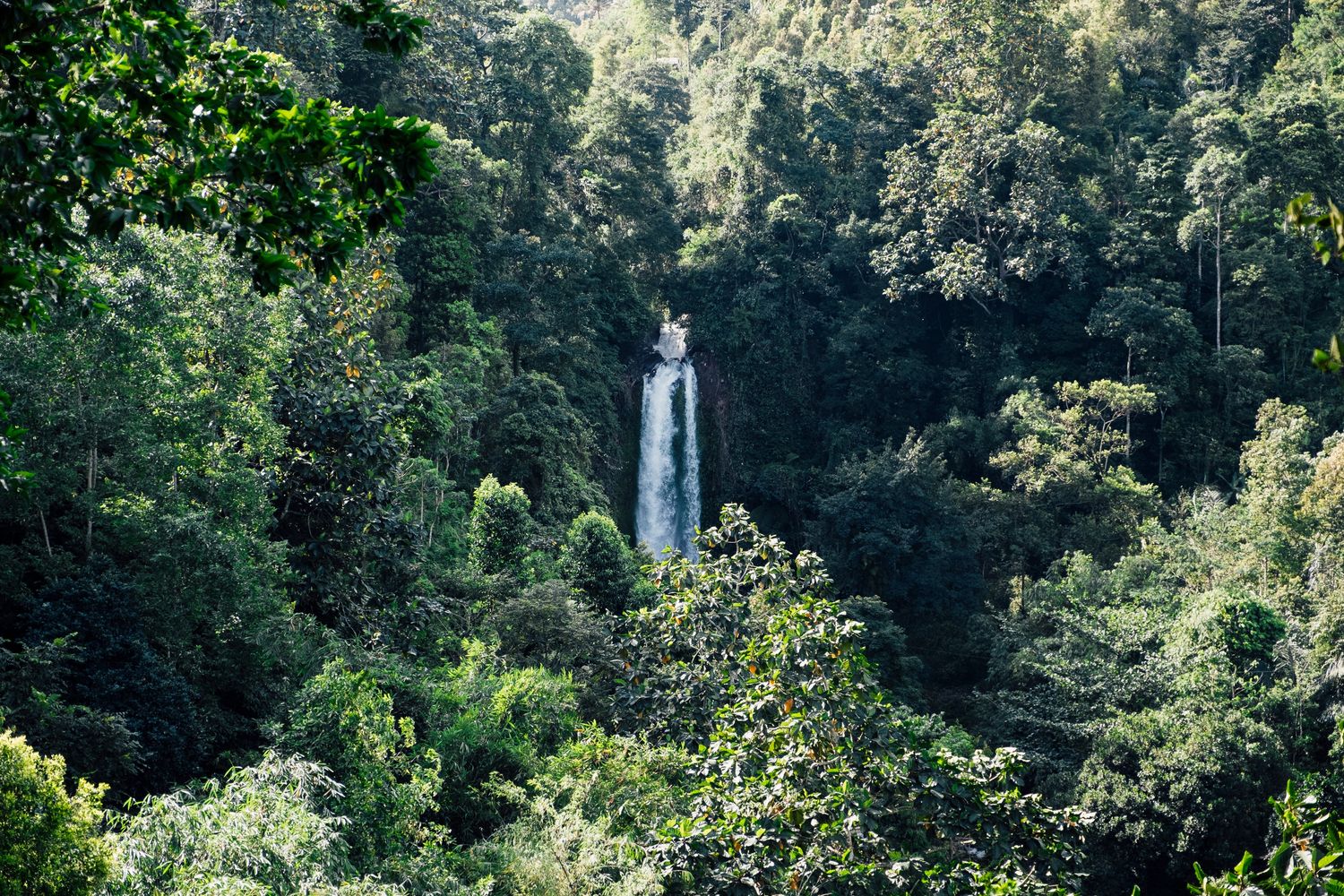
Far from being merely decorative, these plants are structural pillars of their ecosystems. They oxygenate rivers, anchor riverbanks, and shelter fish fry. In fact, they do this across habitats ranging from acidic blackwater swamps to clear highland streams. As a result, many beloved aquarium plants trace their origins directly to Borneo’s waters.
“Many of the most celebrated aquarium plants in the world trace their origins directly to Borneo’s rivers and wetlands.”
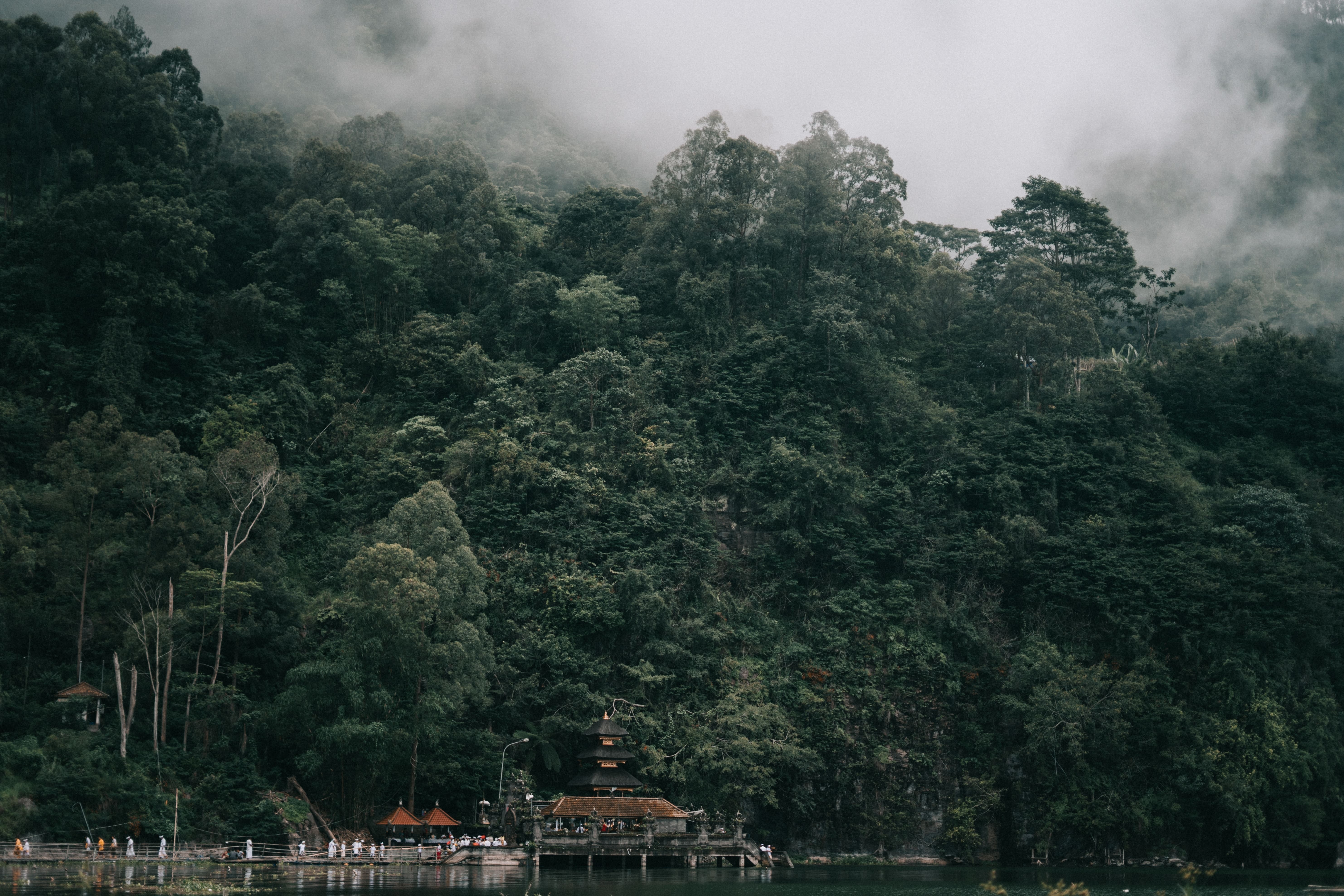
Yet the rainforest is only one chapter in Borneo’s ecological story. Across its lowlands, vast peat swamp forests spread across waterlogged terrain where centuries of decaying plant matter have built up into deep, carbon-rich peat deposits. In fact, these swamps are among the most important carbon stores on Earth — and, at the same time, among the most threatened. Beneath their dark, tannin-stained waters lies an ancient archive of organic material stretching back thousands of years.
The blackwater rivers and peat swamps
Borneo’s lowland peat swamp forests are among the most unusual aquatic environments on Earth. Unlike typical tropical rivers, the water here is dark, tea-brown, and intensely acidic. For instance, the pH can drop as low as 3 or 4. The water is also almost entirely free of dissolved minerals.
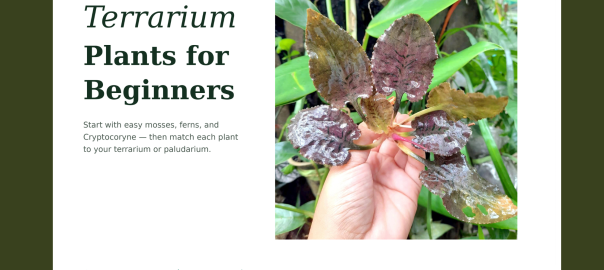
In these soft, acidic conditions, plants like Cryptocoryne species thrive. Indeed, Crypts are one of the most recognisable aquarium plant genera in the world. Many popular varieties originate directly from Borneo’s peat swamp rivers. For example, Cryptocoryne cordata grows naturally in the shaded streams of Kalimantan. Its broad, textured leaves are perfectly adapted to the dim forest light above.

- Peat swamp rivers
Dark, acidic blackwater. Low light, mineral-poor. Ideal for shade-tolerant, slow-growing plants.
- Clear highland streams
Fast-flowing, oxygenated, cooler waters. Plants cling to rocks and submerged wood.
- Mangrove estuaries
Brackish tidal zones. Specialised plants tolerant of salt and shifting water levels.
- Montane streams
Cool, clear highland water. Mosses, ferns, and small-leaved plants colonise rocky beds.
- Montane forest
Cloud-shrouded forests above 1,000 m, including around Mt Kinabalu, home to unique alpine species and pitcher plants.
- Open floodplains
Sunny, shallow, nutrient-rich seasonal wetlands. Fast-growing, light-hungry species.
- Coastal reef margins
Seagrass meadows in shallow marine waters. Foundation of coastal food webs.
The Bucephalandra connection
No plant better embodies the link between Borneo and the aquascaping hobby than Bucephalandra. Notably, this genus is entirely endemic to Borneo. In other words, it grows nowhere else on Earth. Specifically, it clings to rocks in the fast-flowing streams of Sarawak and Kalimantan. Its iridescent leaves shimmer blue, green, and purple beneath the water.
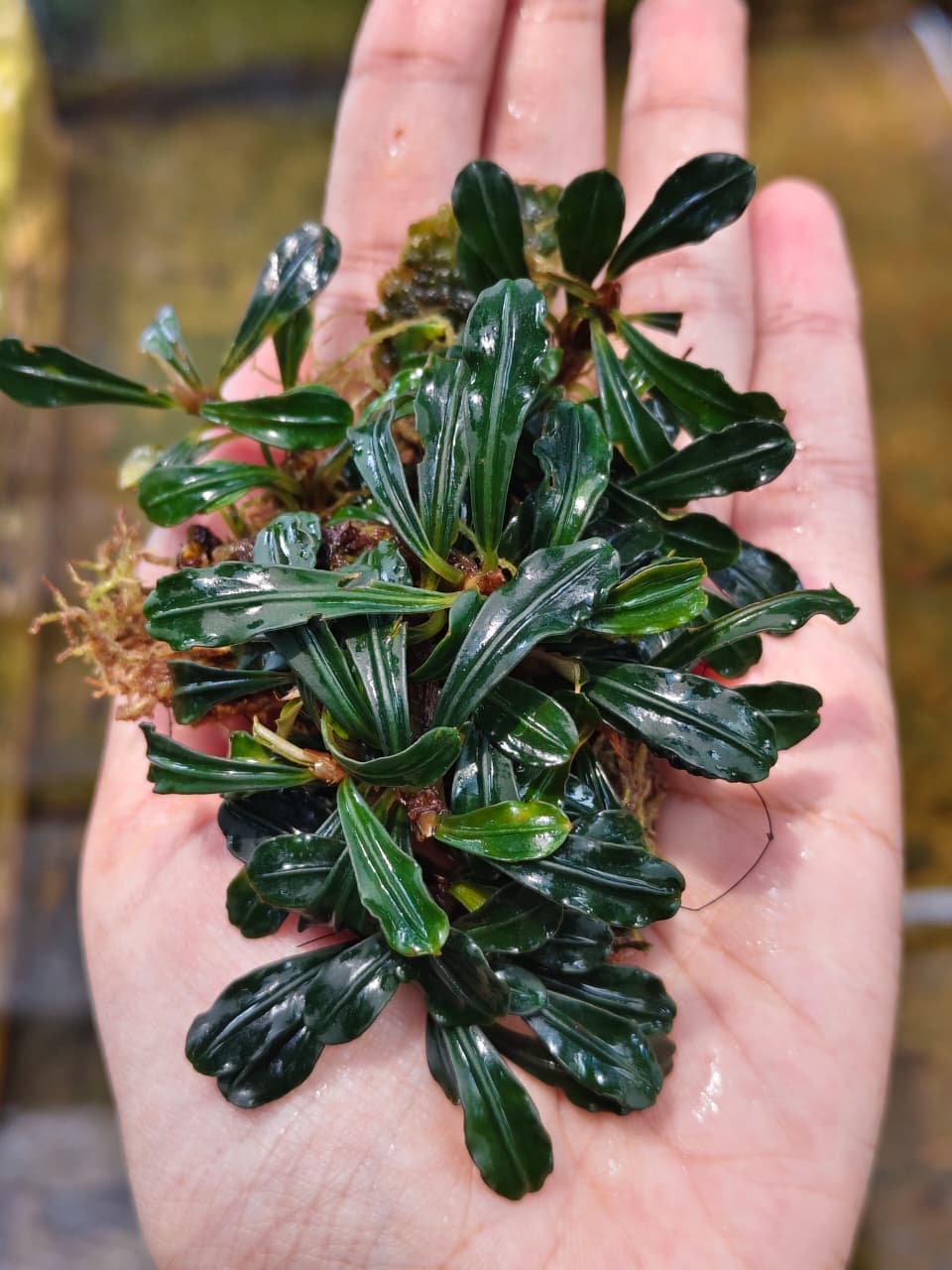
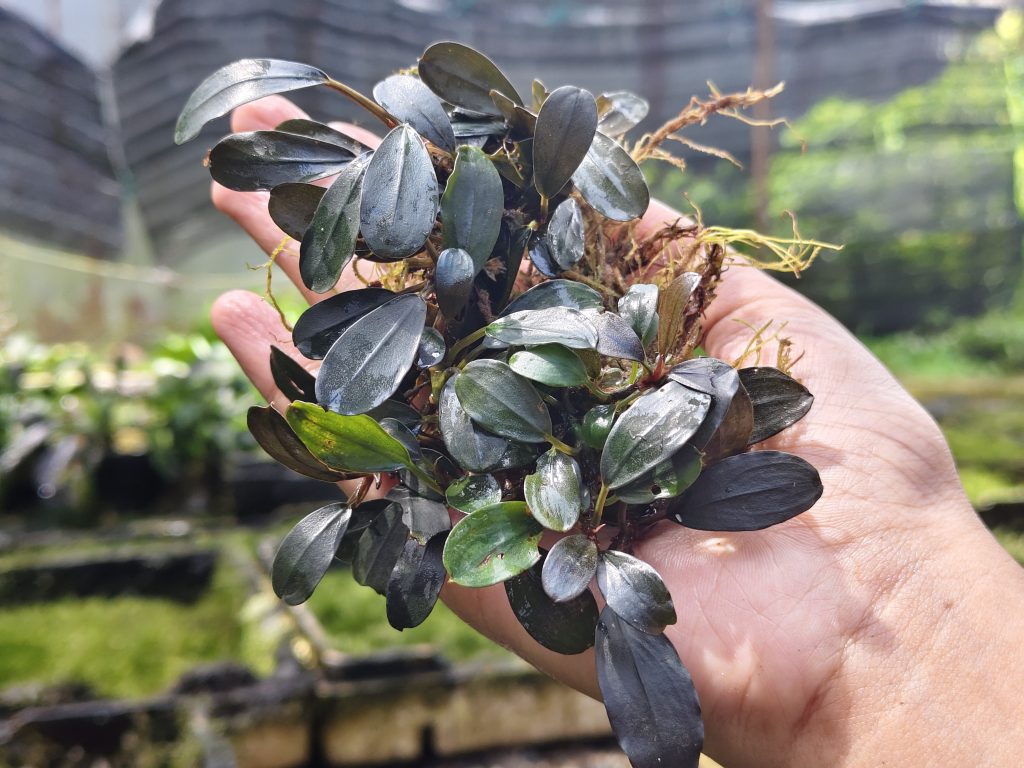
When Bucephalandra appeared in the aquarium trade around 2012, it caused a sensation. Not only is it slow-growing and low-light tolerant, but its wild rarity made it exceptionally prized. Today, hundreds of named varieties circulate among hobbyists. Many are collected sustainably by local Dayak communities.
Borneo-origin aquarium plants — a selection
- Bucephalandra
Bucephalandra sp.
Midground. Iridescent leaves, endemic to Borneo streams. Low light, no CO₂ required.
- Cryptocoryne cordata
Cryptocoryne cordata
Midground. Broad, dark leaves. Native to Borneo peat swamp rivers. Very hardy.
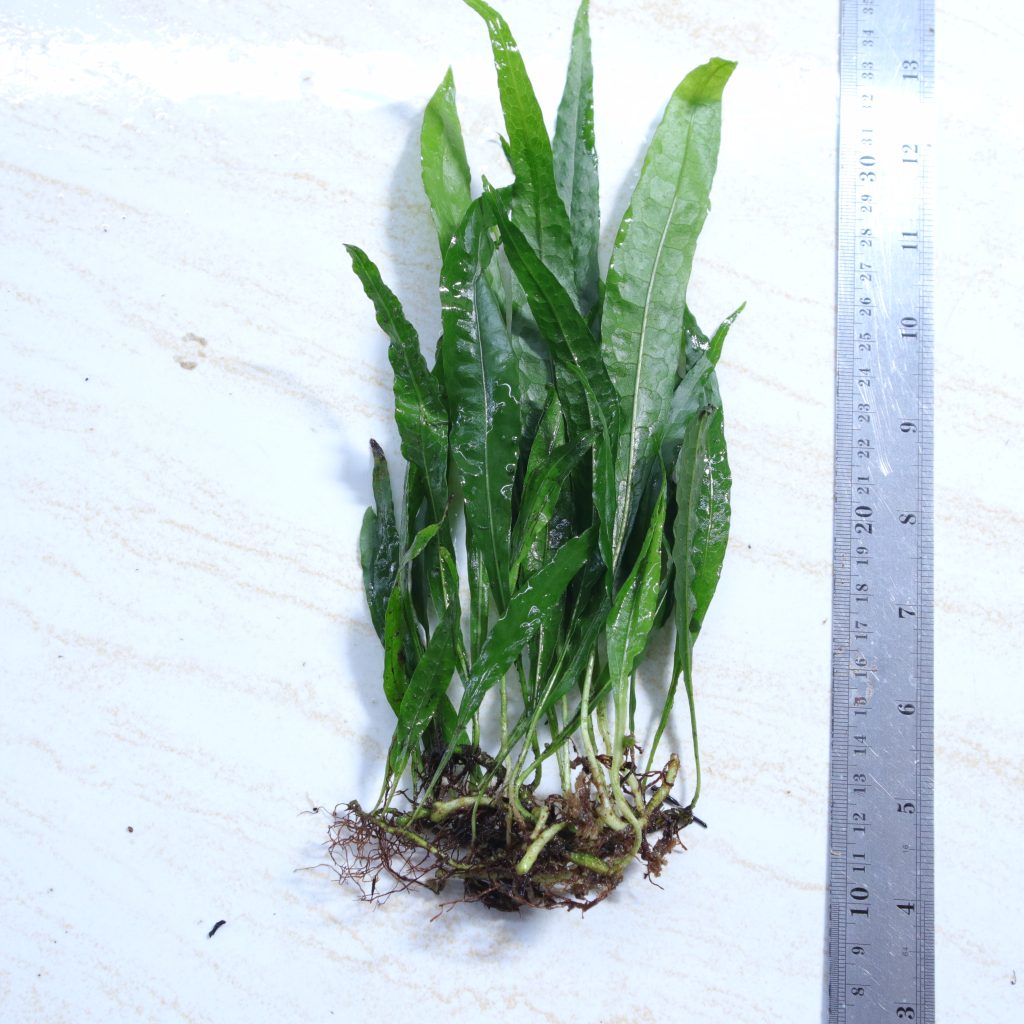
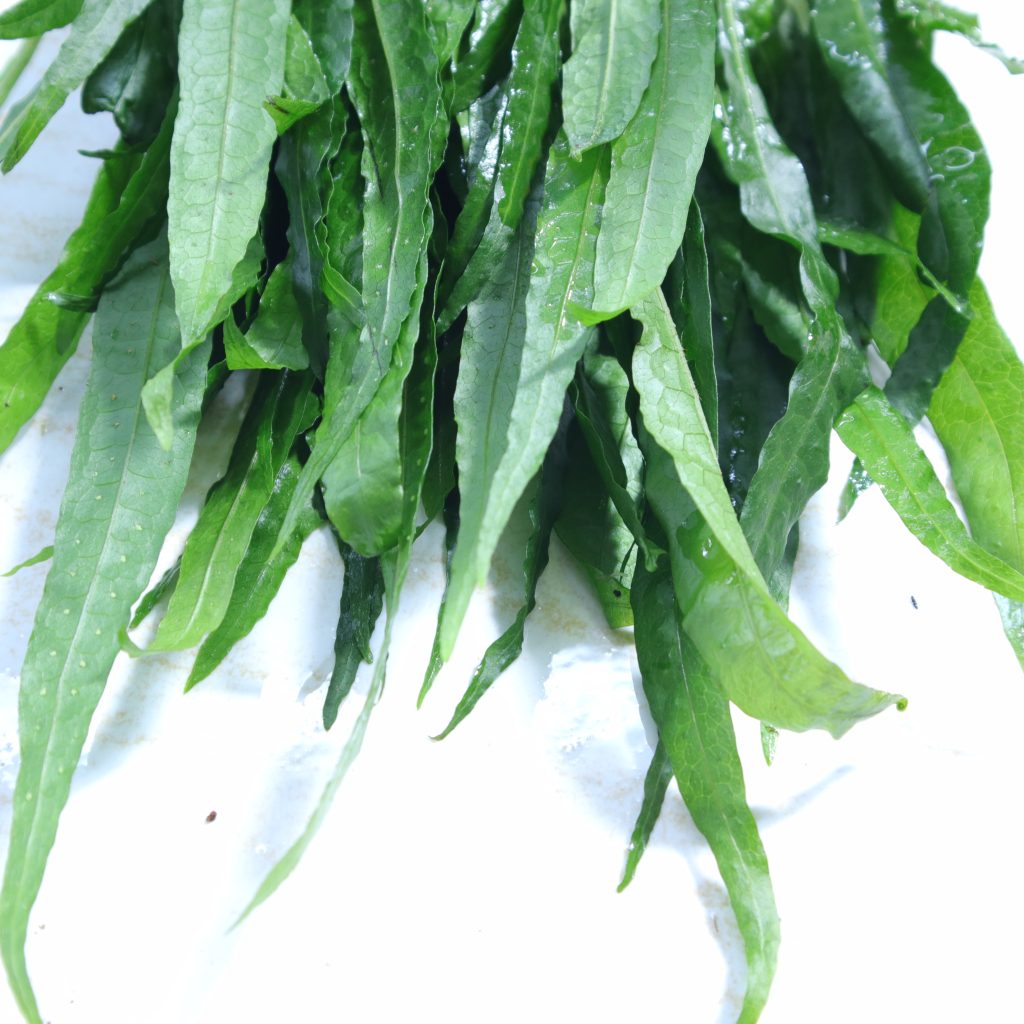
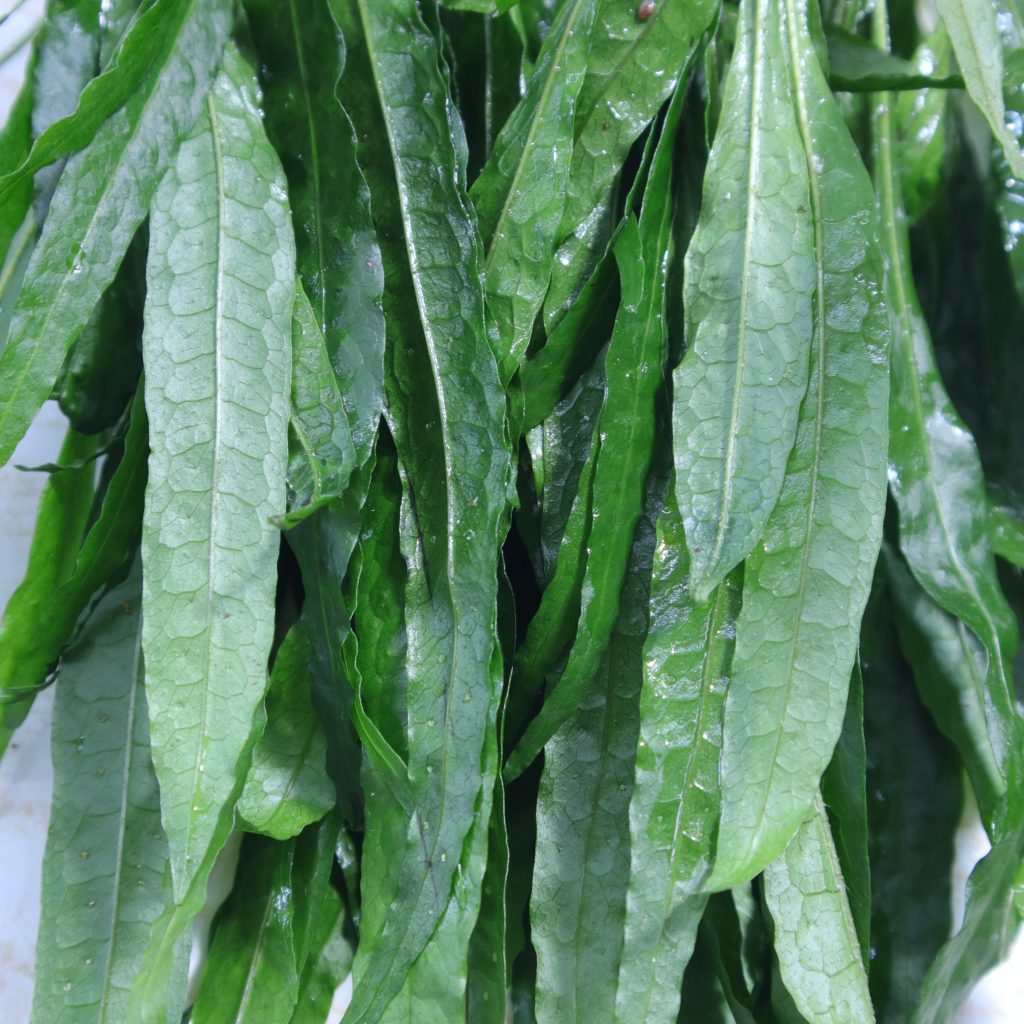
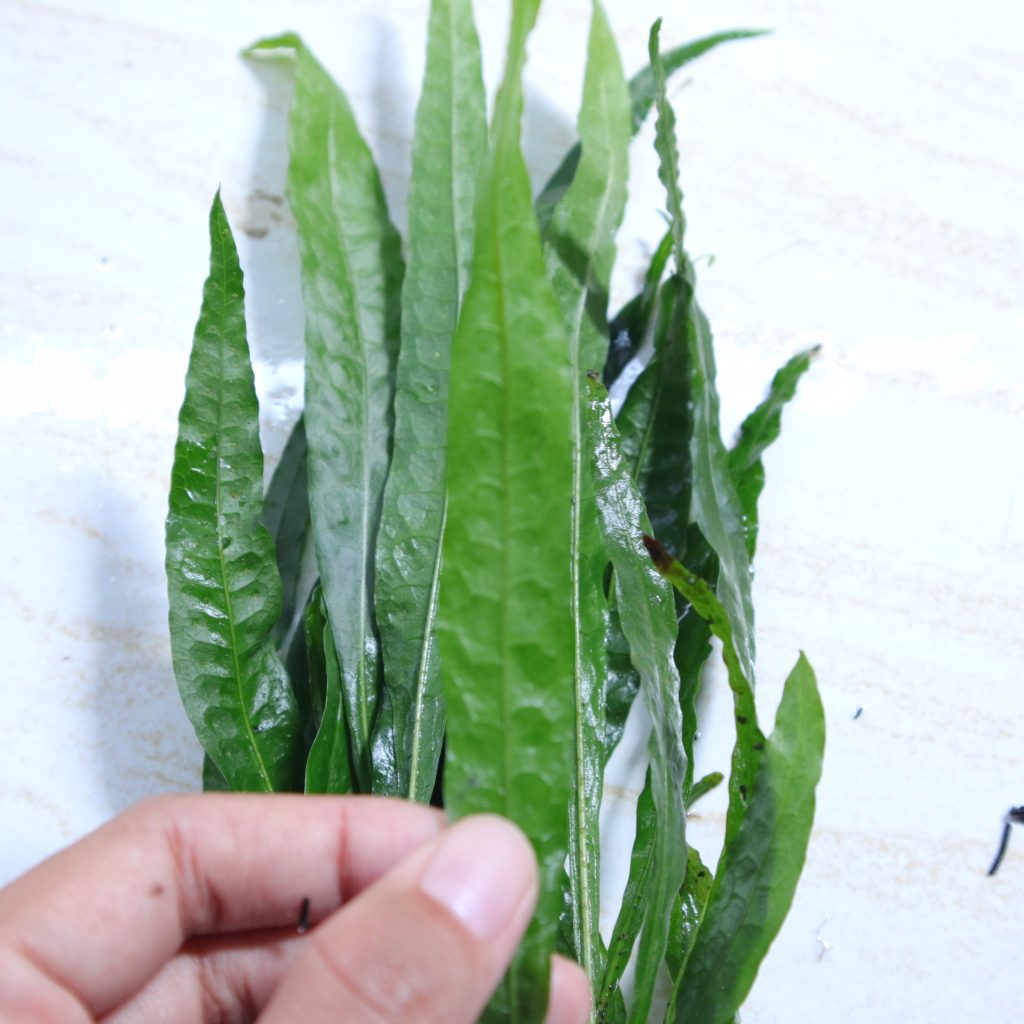
- Java fern
Microsorum pteropus
Midground. Attaches to driftwood or rock. Extremely robust, wide natural range including Borneo.

Highland streams and montane habitats
Beyond the lowland swamps, Borneo’s highland streams present a different world. Here, the water runs clear, cool, and fast over smooth stones. As a result, plants must anchor firmly to hard surfaces to survive. Mosses like Vesicularia montagnei and rheophytic Bucephalandra have evolved precisely for these conditions.
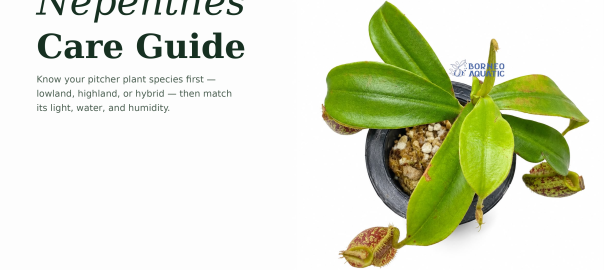
Furthermore, the zones around Mount Kinabalu support a distinct plant community. Cooler temperatures favour mosses, ferns, and semi-aquatic species. In addition, Nepenthes pitcher plants grow along stream margins. Each trap functions as a miniature aquatic ecosystem in its own right.
Mangroves, coasts, and seagrass meadows
Moving toward the coast, the aquatic plant communities shift again. Mangrove root systems provide nurseries for fish, crabs, and prawns. Moreover, these tidal woodlands buffer communities from storm surges. They also filter water in ways that no built infrastructure can replicate.
Beyond the mangroves, shallow coastal waters support seagrass meadows. In particular, species like Halophila and Thalassia form the base of coastal food webs. They provide feeding grounds for dugongs, sea turtles, and reef fish. Consequently, the health of these seagrass beds is tied directly to the health of Borneo’s entire nearshore marine ecosystem.
Aquascaping as a lens on Borneo’s ecology
Millions of aquarium hobbyists around the world are recreating fragments of Borneo’s wild ecosystems in miniature. In essence, a planted tank with driftwood, Christmas moss, and a cluster of Bucephalandra is a tiny Kalimantan stream in glass. This connection cuts both ways. Growing awareness of Borneo’s plants has fuelled interest in conserving the ecosystems they come from.
As a result, conservation organisations have found unexpected allies in the planted tank community. These are people who have never visited Borneo. Yet they feel a real attachment to its wild places through the plants on their windowsills.
“To grow a Bucephalandra in your aquarium is, in a small way, to carry a piece of Borneo’s rivers into your home.”
Despite decades of study, Borneo’s aquatic plant diversity remains only partially documented. New species are formally described each year. In fact, large portions of Borneo’s river systems have never been surveyed for aquatic plants. Therefore, what remains undiscovered may rival what has already been found.
Ultimately, Borneo’s rivers are not just ecosystems to be conserved. They are libraries still being read. Their pages are turned slowly by researchers, naturalists, and — increasingly — by the curious aquascapers who find a plant at their local shop and wonder where it really came from.