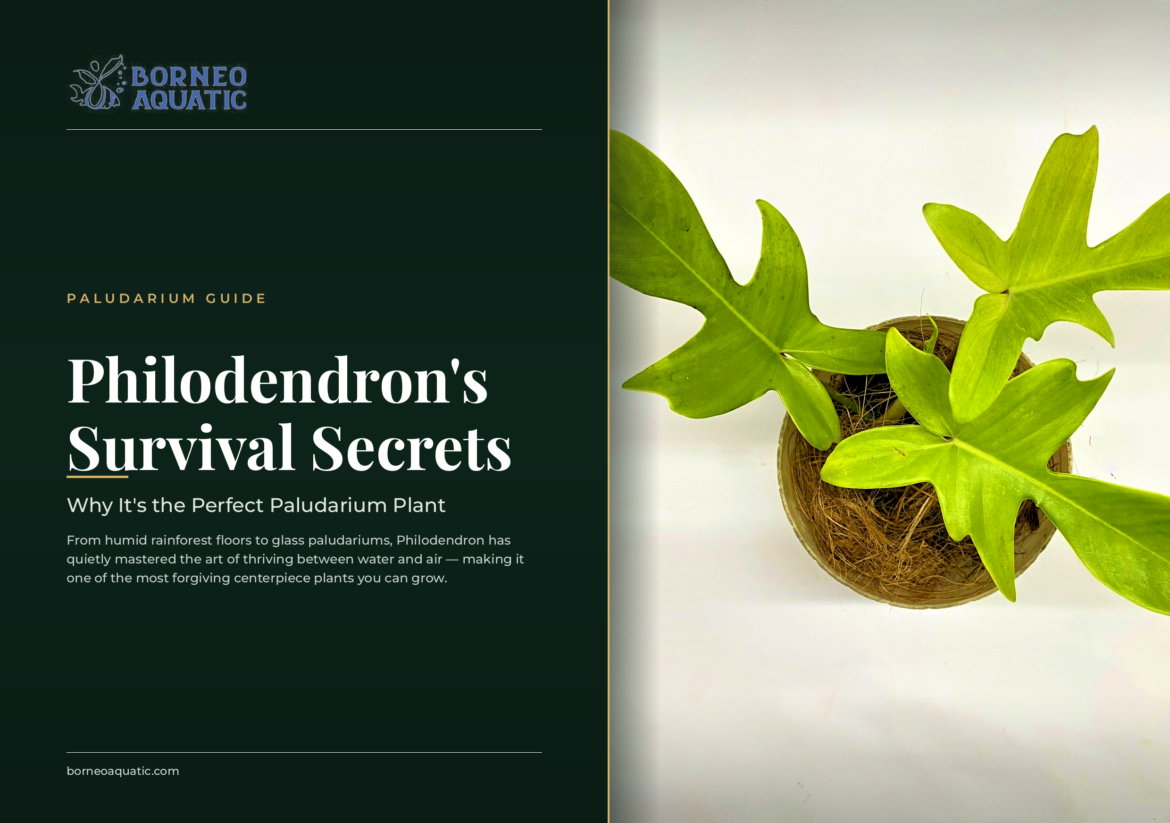
Philodendron’s Survival Secrets: Why It’s the Perfect Paludarium Plant
If you’ve ever set up a philodendron paludarium, you’ve probably noticed something remarkable: this humble jungle plant seems almost engineered to thrive in low light, high humidity, and constant competition for space. That’s no accident. Philodendron evolved over millions of years beneath the dense rainforest canopy of Borneo, and those same survival strategies are exactly what make it one of the best plants for a paludarium or riparium setup.
For aquarium hobbyists looking to add greenery above the waterline, understanding why philodendron behaves the way it does isn’t just interesting trivia — it’s the key to keeping it healthy and thriving in your own tank.
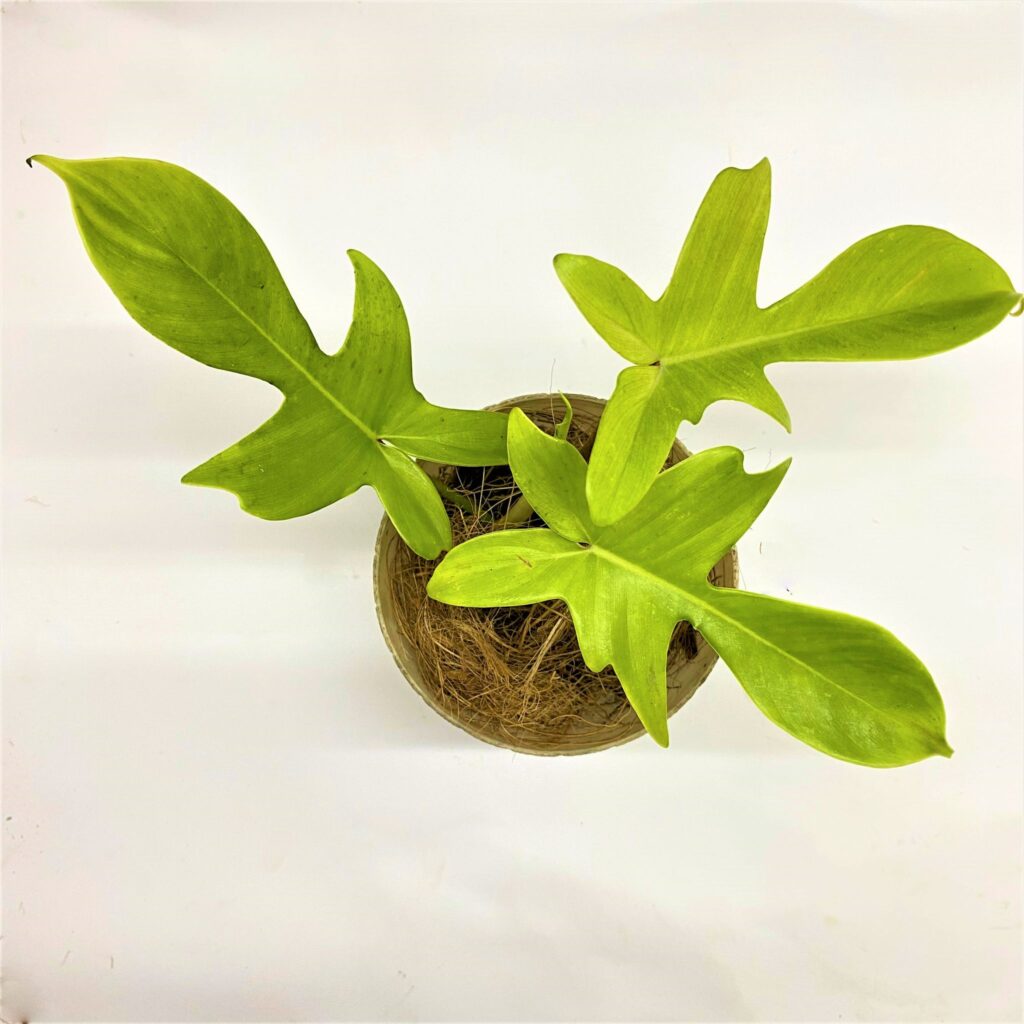
Image “Philodendron Florida Ghost — a rare houseplant with uniquely lobed leaves”
Climbing Instead of Competing
In the wild, philodendron rarely grows straight up from the forest floor. Instead, it starts life low down or even attached to a tree trunk, then climbs toward gaps in the canopy where sunlight breaks through. This climbing habit — known as hemiepiphytic growth — is ideal for a philodendron paludarium, where vertical space above the tank is often more available than floor space. Give it a piece of driftwood or a background wall to grip, and it will happily climb rather than sprawl. Check our paludarium and aquascape supplies for driftwood, backgrounds, and mesh options suited for climbing plants.
Aerial Roots: Nature’s Multi-Tool
Those wiry roots dangling from philodendron stems aren’t decorative — they’re functional. Aerial roots grip rough surfaces for stability while absorbing moisture straight from humid air. Inside an enclosed paludarium, where humidity levels naturally stay high, these roots thrive without ever touching soil. This is one reason philodendron adapts so well to semi-aquatic environments compared to typical houseplants.
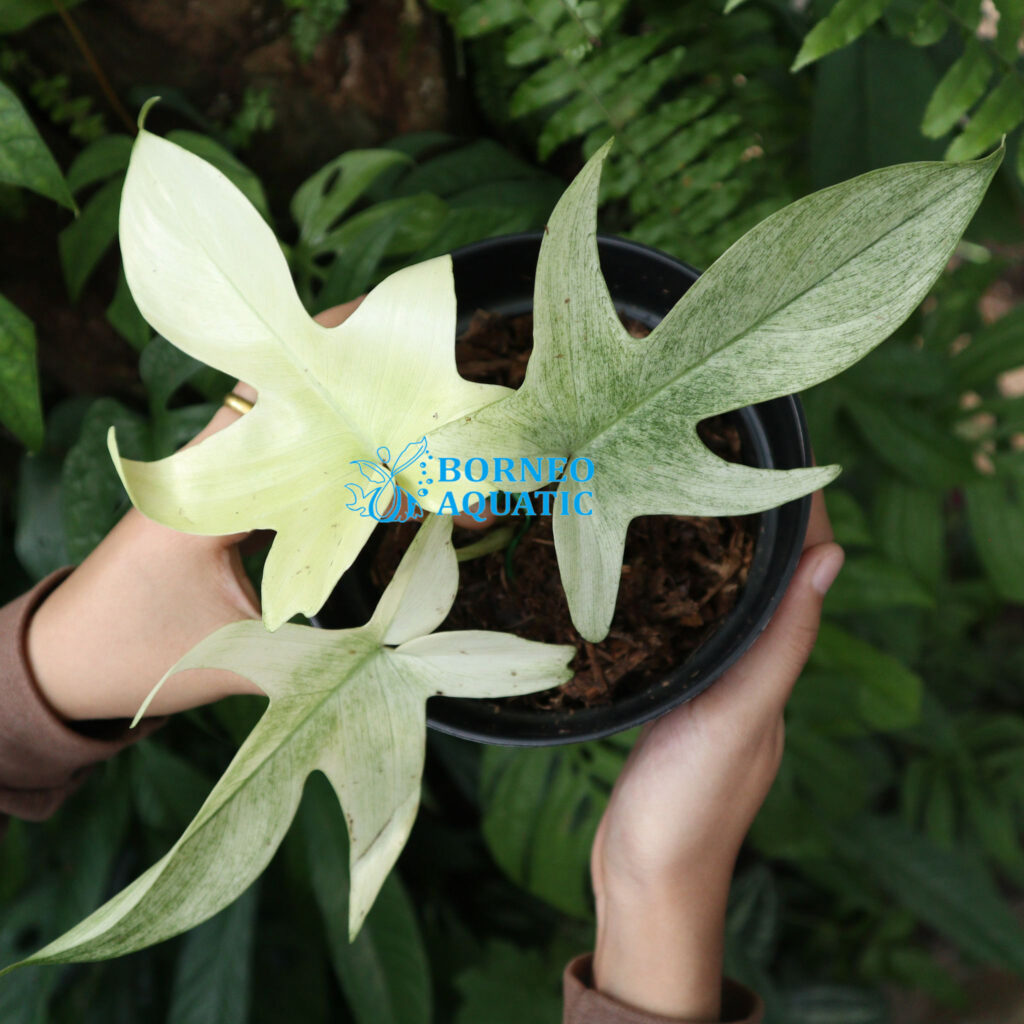
Image “Philodendron Florida Ghost Mint — a rare houseplant with lobed leaves showing striking cream-to-mint variegation”
Fenestration: Leaves Built for Filtered Light
Some philodendron varieties develop split or perforated leaves as they mature — a trait called fenestration. Researchers believe this helps the plant withstand strong wind gusts in the canopy, allows light to reach lower leaves, and improves airflow around dense foliage. In a paludarium, this same trait lets philodendron make efficient use of the filtered LED lighting typically used in aquascaping setups, rather than requiring direct, intense sunlight. Learn more about this adaptation from Wikipedia’s entry on epiphytes.
From Juvenile Sprout to Jungle Giant
Young philodendron leaves are small and heart-shaped. But once the plant finds something to climb and settles into consistent humidity, hormonal changes trigger a dramatic shift into much larger, more mature leaf shapes. Hobbyists building a philodendron paludarium often witness this transformation firsthand — a modest-looking plant at purchase can grow into a lush centerpiece within just a few months, provided it has climbing support and stable moisture. Pair it with some ornamental fish for community tanks to bring the semi-aquatic display fully to life.
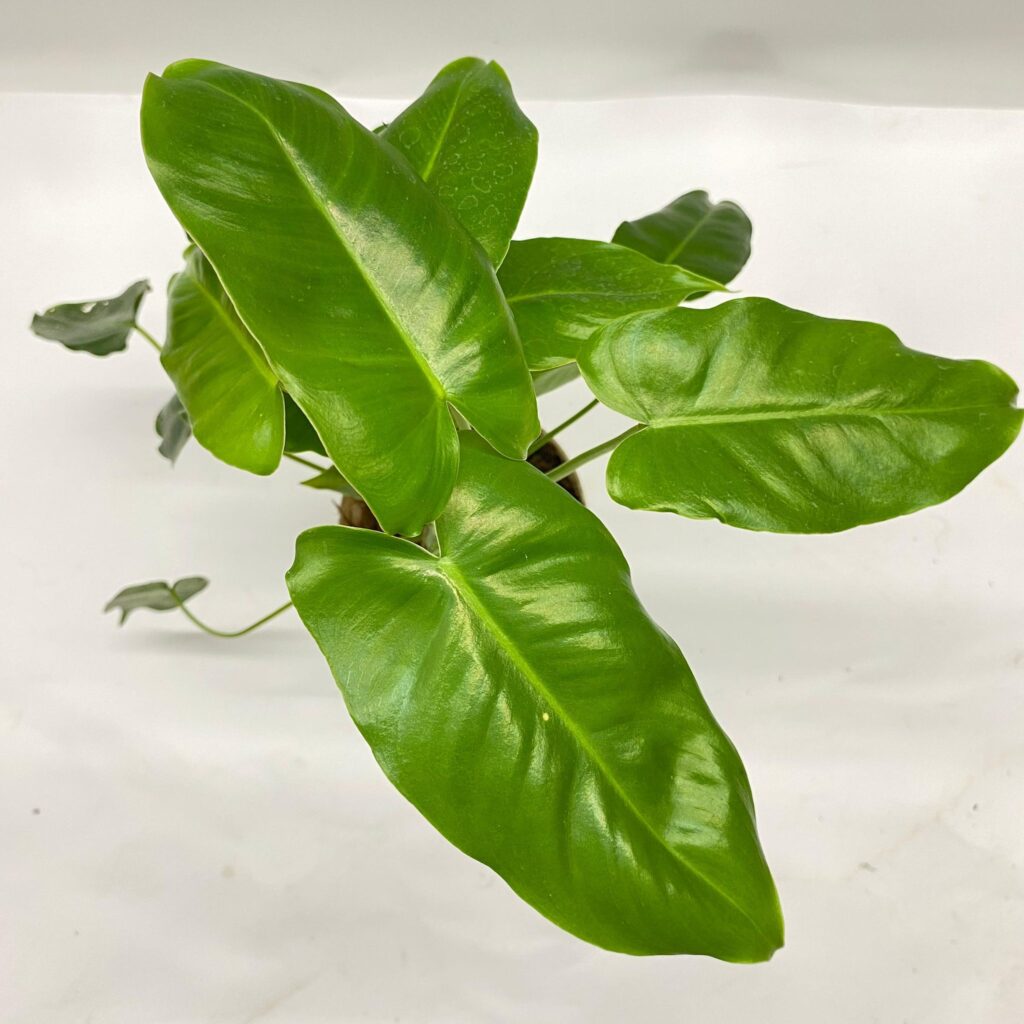
Image “Philodendron Burle Mark — a houseplant with glossy, deep green leaves and slightly wavy edges”
Bringing the Canopy’s Secret Into Your Tank
The takeaway for aquarists is simple: replicate the canopy, and philodendron will do the rest. That means providing:
- A humid, partially enclosed environment
- A vertical surface (driftwood, backgrounds, or mesh) for climbing
- Indirect, filtered lighting rather than direct sun
- Consistent moisture without waterlogging the roots
For deeper reading on the biology behind these adaptations, see this research on aroid plant morphology.
Final Thoughts
A philodendron paludarium isn’t just a decorative touch for your aquarium — it’s living proof of millions of years of rainforest adaptation. Once you understand how philodendron climbs, absorbs moisture, and responds to filtered light, keeping it healthy in a semi-aquatic setup becomes far more intuitive. Whether you’re building your first paludarium or upgrading an existing aquascape, philodendron rewards patience with dramatic, ever-changing growth.