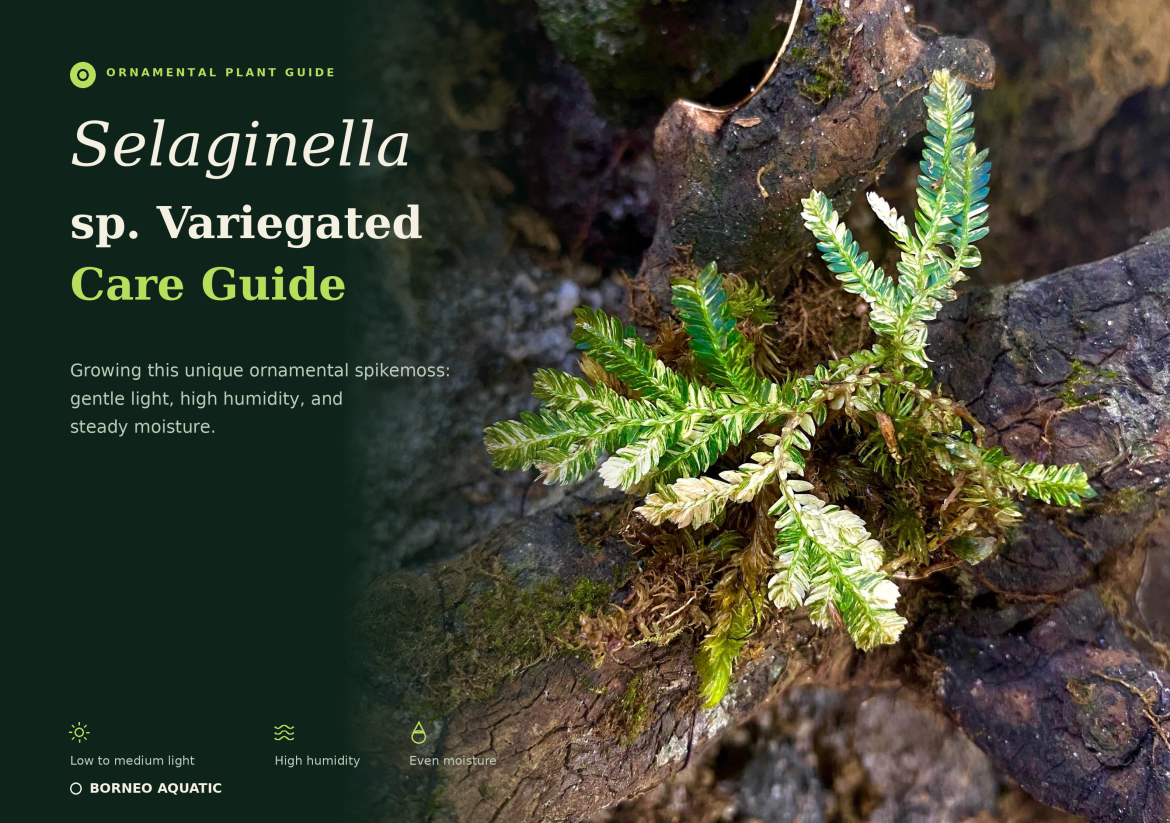
Selaginella sp. Variegated Care Guide: Growing This Unique Ornamental Plant
Selaginella looks like moss, grows like a miniature fern, and has a patterned, ornamental look that turns heads in a terrarium. This Selaginella sp. Variegated care guide explains what the plant is, which conditions keep its foliage lush, and how to fix the problems that most often hit new keepers, so you can enjoy its texture for a long time.
What Is Selaginella sp. Variegated?
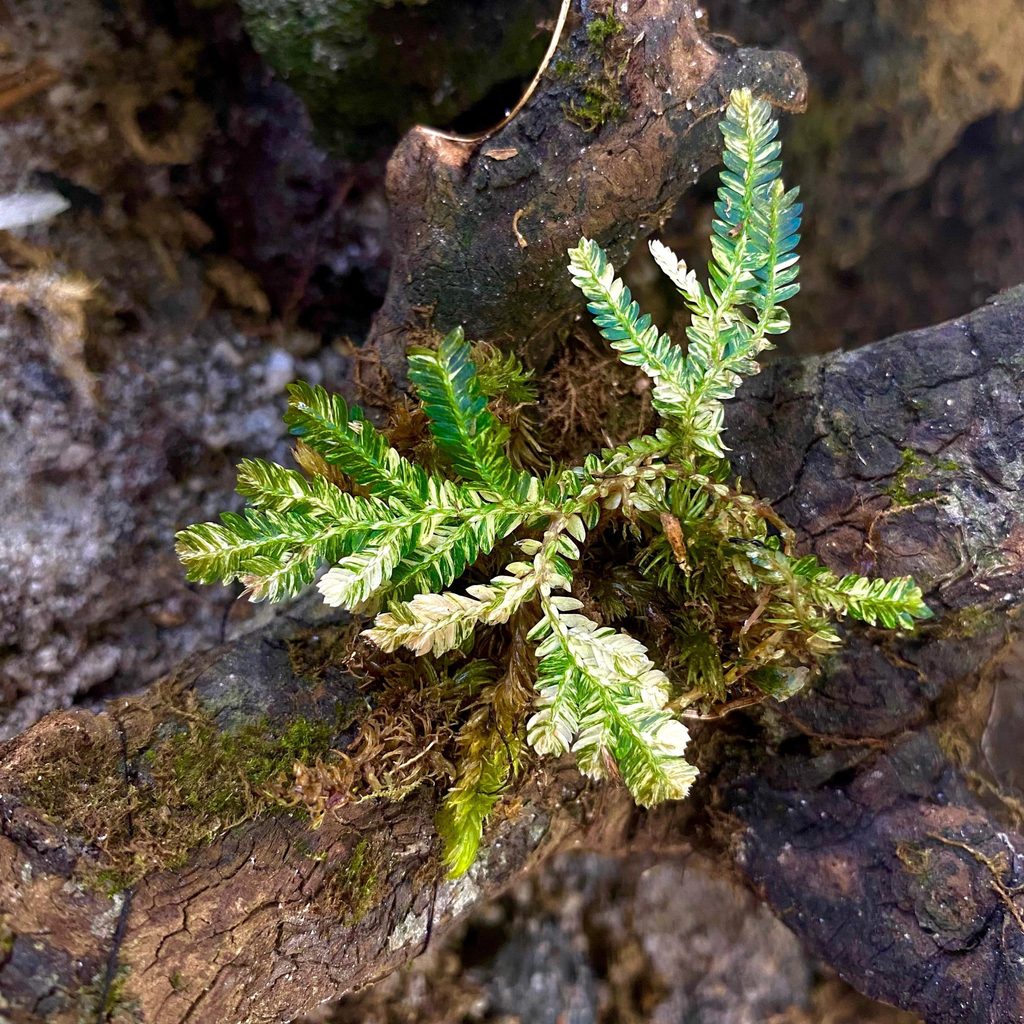
Selaginella is a genus of plants commonly called spikemoss. Despite the name, it is not a true moss. It has vascular tissue like a fern, it reproduces by spores, and growers sometimes call it a clubmoss or even a fern. The genus holds hundreds of species, and most of them come from tropical regions, where they grow on shaded forest floors.
The “sp.” in the name tells you that growers have not identified the species, or at least have not confirmed its scientific name yet. “Variegated” describes the foliage, which shows a lighter or contrasting pattern instead of plain green. Because we cannot say exactly which species this plant is, we base its care on what the genus needs: shade, steady moisture, and high humidity.
Why Terrarium Keepers Love Selaginella
Selaginella adds texture that few other plants can match. Creeping types form soft mats across the ground, while upright types look like tiny ferns. It works best as a texture builder instead of a single focal plant, so it pairs well with mosses, small ferns, and other humidity lovers.
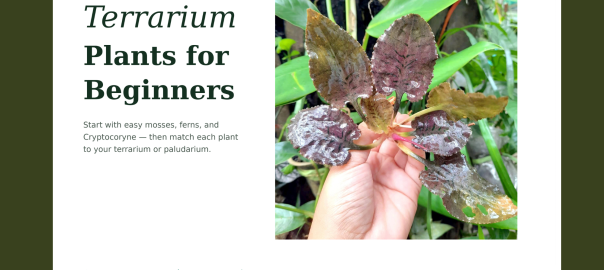
A closed or semi-closed glass container suits it well, because the glass shields the plant from dry household air. If you are still choosing your first plants, our guide to terrarium plants for beginners shows which ones fit a first setup.
Light Requirements
Give Selaginella sp. Variegated low to medium indirect light. A spot with soft, filtered light or a grow light with gentle intensity works well.
Direct sun dries and scorches the foliage, and a sealed glass container makes the heat worse. Too little light causes the opposite problem: thin, stretched growth and a weaker leaf pattern. If the plant looks leggy, move it a little closer to the light.
Humidity and Temperature
High humidity is the single most important factor. A closed or semi-closed terrarium keeps humidity stable without extra effort. In an open setup, mist often or place the plant near the water in a paludarium.
Keep the temperature warm and steady, and avoid cold drafts. Tropical Selaginella does not tolerate cold well.
Substrate and Watering
Use a moisture-retentive mix that still drains. A standard tropical terrarium blend of coco fiber, sphagnum moss, fine bark, and a little perlite or leaf litter works well.
Keep the substrate evenly moist. Selaginella dislikes drying out completely, but soggy, stagnant roots cause rot. Check the condensation on the glass before you add water, and water less in a closed terrarium.
Placing Selaginella in Your Setup
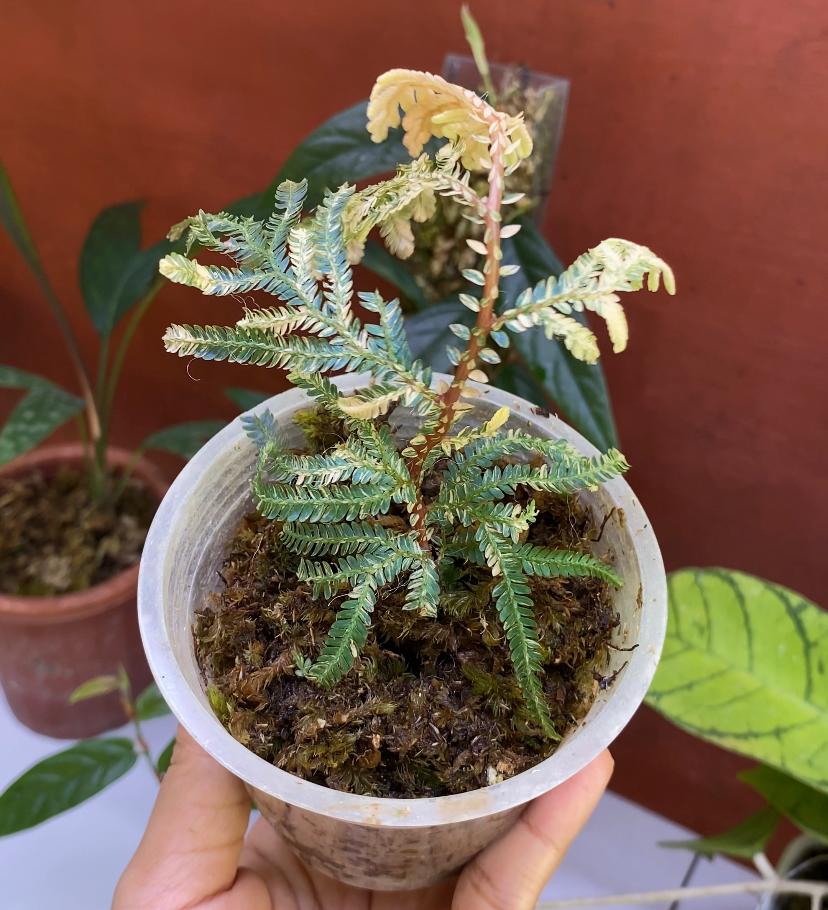
Plant it in the foreground or midground, where its soft foliage stays visible. Let it spread over bare soil, around roots, or along the base of hardscape. Give it some room from fast, tall plants that would shade it out.
Pair it with plants that share its conditions, such as moss and compact ferns. If you want a taller, structural contrast, add a hardscape piece like spider wood behind it.
Can Selaginella Dry Out and Come Back?
Some Selaginella species survive drought by curling into a dry, brown ball, then unfurling when moisture returns. Do not count on this for your plant, though. Because we do not know which species this is, treat it as a plant that needs steady moisture, and never test its limits.
Common Problems
Use this Selaginella sp. Variegated care guide as a checklist when something looks wrong:
- Crispy or browning foliage: the air is too dry, or the light is too strong.
- Yellowing, collapsing, or mushy growth: the substrate stays too wet, or the water stagnates.
- Thin, stretched growth: the plant needs more light.
- Leaf loss after arrival: a newly arrived plant often drops a few leaves while it adjusts, so keep conditions steady and give it a few weeks.
Most problems trace back to light, humidity, or water. Change one factor at a time so you can see what made the difference.
Propagating Selaginella
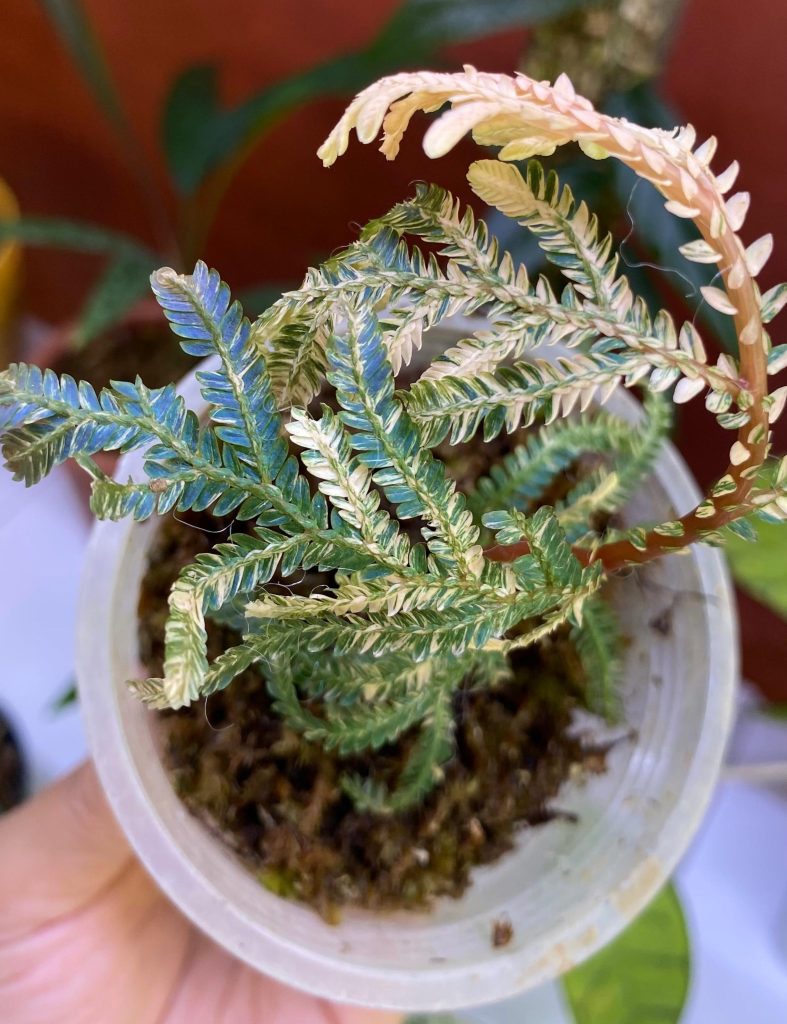
Division is the easiest method. When a mat grows dense, split it into clumps and replant them. Stem cuttings that carry a few leaves and roots also root readily. Keep both in high humidity until they settle. Most keepers skip spore propagation because it takes a lot of effort for little payoff.
Is Selaginella sp. Variegated Right for You?
This Selaginella sp. Variegated care guide points to one answer: the plant suits keepers who already have a stable, humid setup. It forgives mistakes better than many rare jewel plants, but it still dislikes dry air and sudden swings. If you are new to terrariums, start with the easiest plants, and add Selaginella once your container has run steadily for a few weeks.
Where to Find Selaginella sp. Variegated
You can find Selaginella Variegated in our shop, and you can browse more patterned foliage in our variegated plants collection. For more background on the genus, the Terrarium Tribe Selaginella guide explains the common species and their growth habits. Explore everything else in our shop.
Final Thoughts
Follow this Selaginella sp. Variegated care guide, and the plant gives a terrarium soft texture, a delicate pattern, and a lush green carpet. Give it gentle light, high humidity, and steady moisture, and it will fill your container with ornamental foliage.
BORNEO AQUATIC Growing plants. Connecting people. Giving back to nature.