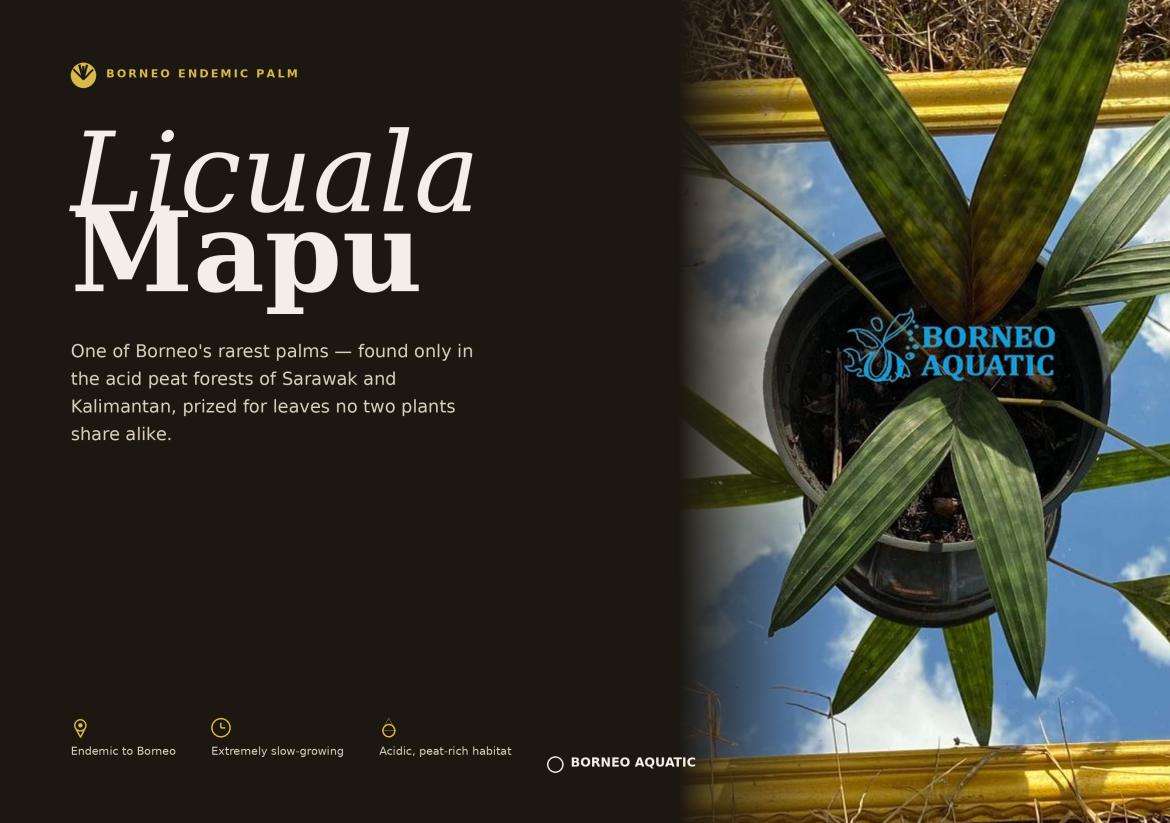
Licuala Mapu: The Rare Endemic Palm Hiding in Borneo’s Rainforest Floor
Deep in the shaded, acid-soaked rainforest understory of Borneo grows a palm that collectors around the world chase for years before ever owning one. Licuala mapu is not just another pretty fan palm it is one of the rarest, slowest-growing, and most visually striking palms in cultivation, and almost everything about it ties back to the very specific corner of Borneo it calls home.
What Is Licuala Mapu?
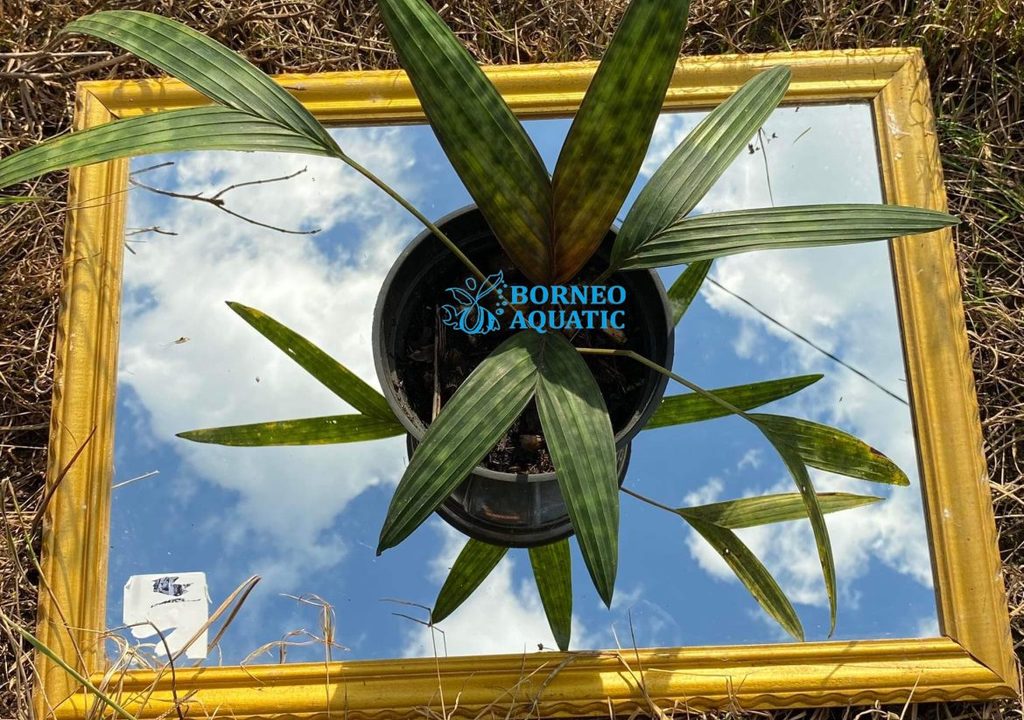
“Mapu” is a trade name, not a formal species name. Botanically, Licuala mapu refers to Licuala mattanensis var. paucisecta, a variety within the genus Licuala in the palm family Arecaceae. The name paucisecta means “few cut,” a reference to how few segments divide each fan-shaped leaf compared to other Licuala species.
Collectors and nurseries often shorten this mouthful to simply “Mapu” or market it under the common name Paradise Palm. Because the trade name has become more popular than the botanical one, you will sometimes find other, unrelated Bornean Licuala species mislabeled as “mapu” — a real point of confusion among palm enthusiasts, so a reputable seller matters as much as the plant itself.
A True Borneo Endemic
Licuala mapu grows nowhere else in the world except Borneo. Botanical records place its native range specifically in Sarawak, with populations also documented across the border on the Kalimantan side of the island. It grows as an understory plant in lowland rainforest, rooted in extremely peaty, highly acidic soil with a pH as low as 2 to 3.
That narrow, specialized habitat explains why Licuala mapu has such a reputation for being difficult to cultivate outside its native range. The palm did not evolve to tolerate ordinary garden soil, bright light, or inconsistent watering — it evolved for one very specific, very humid corner of Borneo’s rainforest floor.
Why Licuala Mapu Looks Like No Other Palm
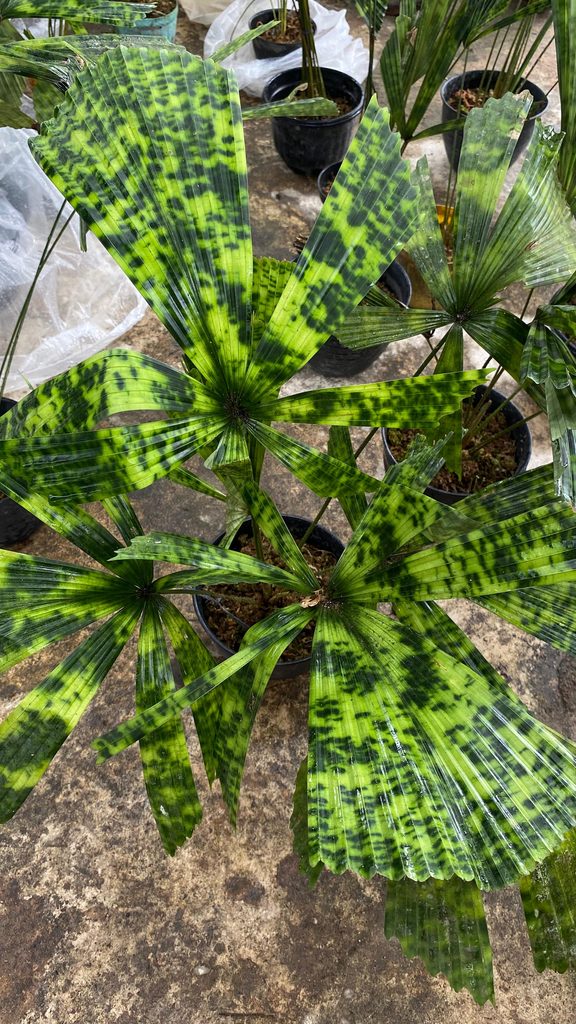
The leaves are the reason collectors fall for this palm in the first place. Each fan-shaped leaf carries an irregular, tessellated pattern of light yellow-green and deep green patches, almost as if someone splattered paint across the foliage. No two leaves look quite the same, and that unpredictability is part of the appeal.
Young plants stay low and clumping, often suckering into small multi-stemmed groups. Given enough time, which can mean decades given how slowly it grows, older specimens eventually develop a slender trunk and can reach up to 3 meters tall, though most cultivated plants stay well under a meter for many years.
Growing Conditions Licuala Mapu Actually Needs
Because its native habitat is so specific, Licuala mapu does not forgive generic palm care. A few conditions matter more than anything else:
- Light: Deep shade to semi-shade only. Direct sun and even bright indirect light will scorch or bleach the leaves quickly.
- Soil: A very acidic, peat-heavy mix drains well but still holds consistent moisture. Growers commonly blend peat with sand, perlite, or vermiculite to recreate the low pH of its native soil.
- Water: Frequent, almost daily watering suits this palm, as long as the mix never sits in standing water. Hard or alkaline water tends to burn the leaf tips over time, so rainwater or filtered water works best.
- Temperature and humidity: Warm, stable conditions above 23°C (73°F) support healthy growth, and the palm only tolerates brief dips to 16–17°C (61–63°F). High, steady humidity matters just as much as temperature — native habitat humidity runs high enough that it can feel oppressive to a human visitor.
- Patience: Even under ideal conditions, Licuala mapu grows slowly. Rushing it with heavy fertilizer or inconsistent care tends to cause more harm than good.
Why Collectors Consider Licuala Mapu So Difficult
Palm growers widely regard Licuala mapu as one of the hardest Licuala species to keep alive long-term, let alone grow well. The narrow tolerance for soil pH, the sensitivity to water quality, and the need for constant humidity leave very little room for error. Many growers who succeed with other rare palms still struggle with this one, which only adds to its reputation and its price tag in the collector market.
A Rare Piece of Borneo’s Rainforest
Owning a Licuala mapu means caring for a small, living piece of a very specific rainforest floor that exists nowhere else on Earth. If you are set up to replicate that shaded, humid, acidic environment, whether in a greenhouse, a terrarium-style enclosure, or a carefully managed shadehouse, this palm rewards patient growers with foliage that few other plants can match.
If you want to see what healthy, well-established Bornean palms and terrarium plants look like before adding one to your own collection, browse our current selection in the shop.
Final Thoughts
Licuala mapu is not a plant for beginners, and it is not a plant you add to a collection on impulse. It is a slow, demanding, genuinely rare palm that only exists because one small corner of Borneo’s rainforest still stands. For growers willing to meet its narrow set of needs, it offers something most palms cannot: foliage that looks hand-painted, grown by nature alone.
BORNEO AQUATIC Growing plants. Connecting people. Giving back to nature.