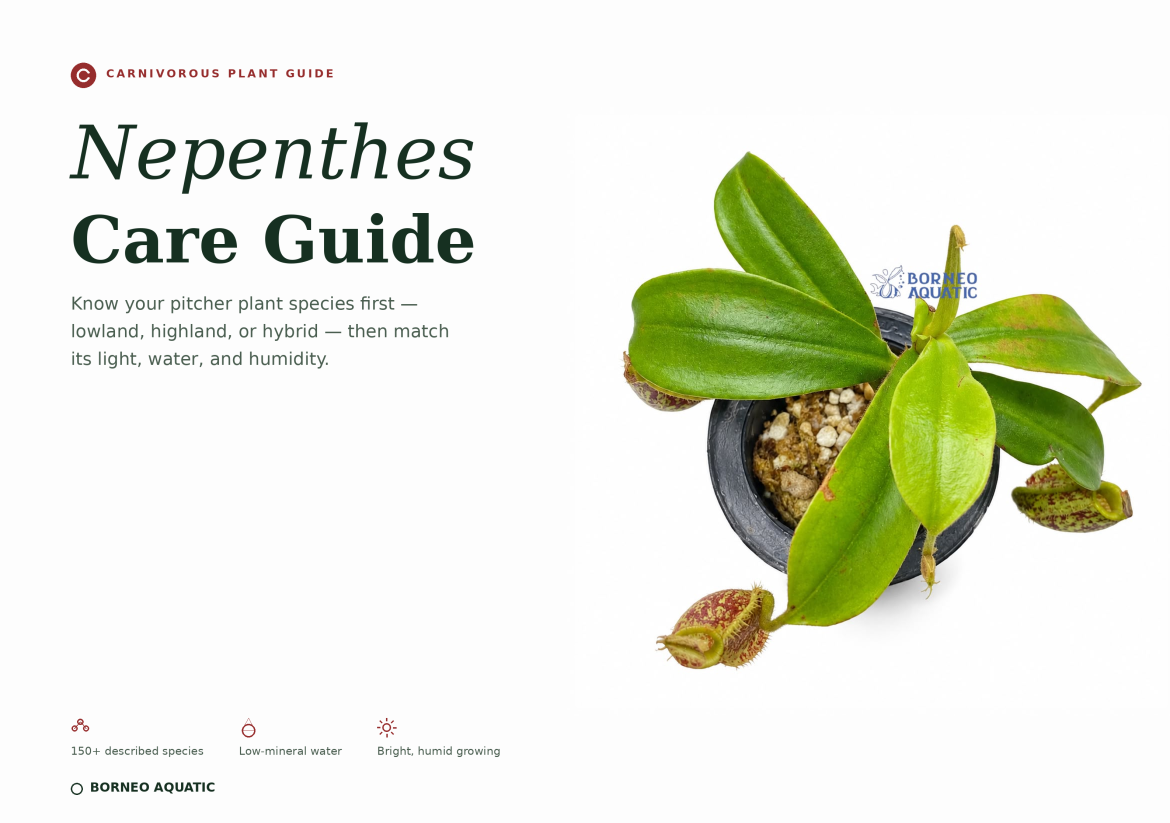
Nepenthes Care Guide: Understand Your Pitcher Plant Species Before You Grow One
Nepenthes, known in Indonesia as kantong semar, looks like a plant that should be impossible to keep alive. It hangs jug-shaped traps from the tips of its leaves, drinks insects for extra nutrients, and grows in places most plants would reject. This Nepenthes care guide starts with something most care guides skip: what Nepenthes actually are, how many species exist, and why knowing which kind you own changes everything about how you care for it.
What Is Nepenthes?
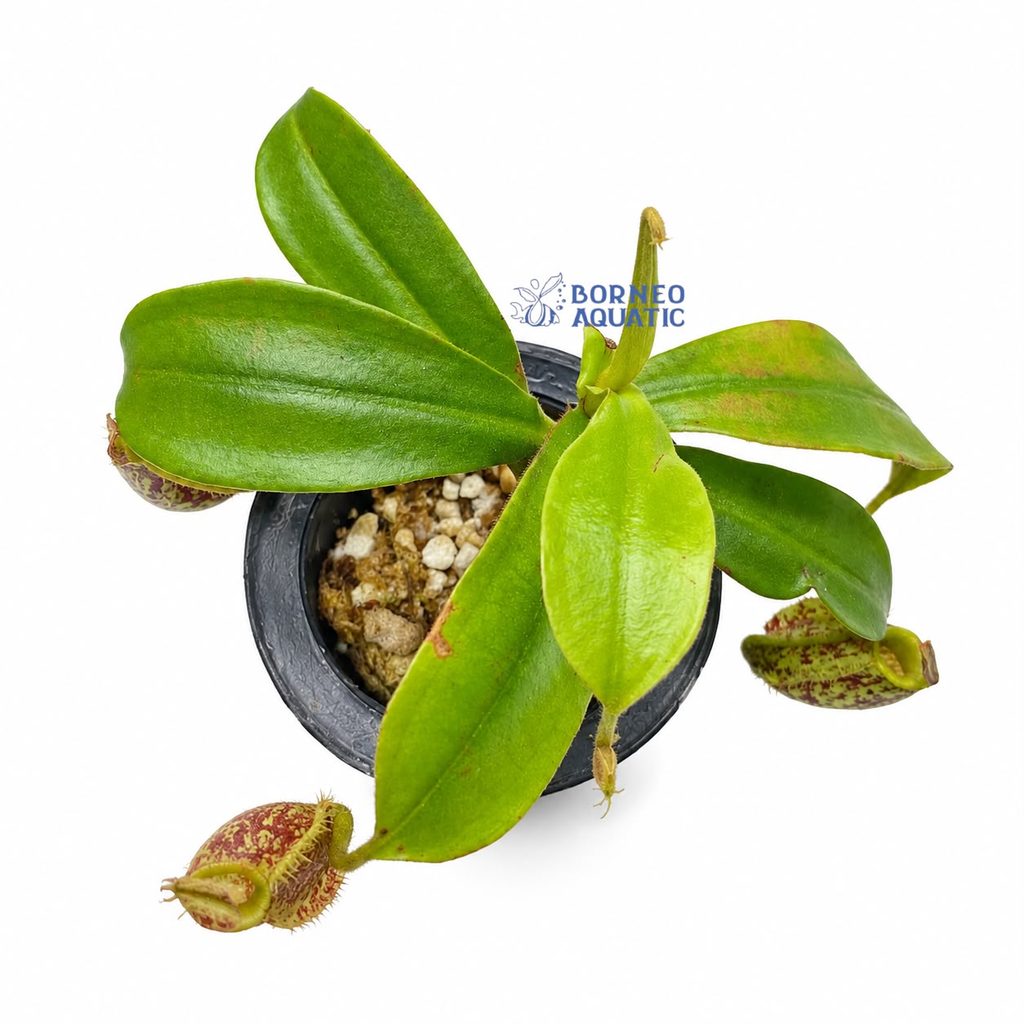
Nepenthes is a genus of tropical carnivorous plants in the family Nepenthaceae. Botanists have described well over 150 species, and some counts approach 200, because researchers keep finding and naming new ones, especially in remote mountain forests.
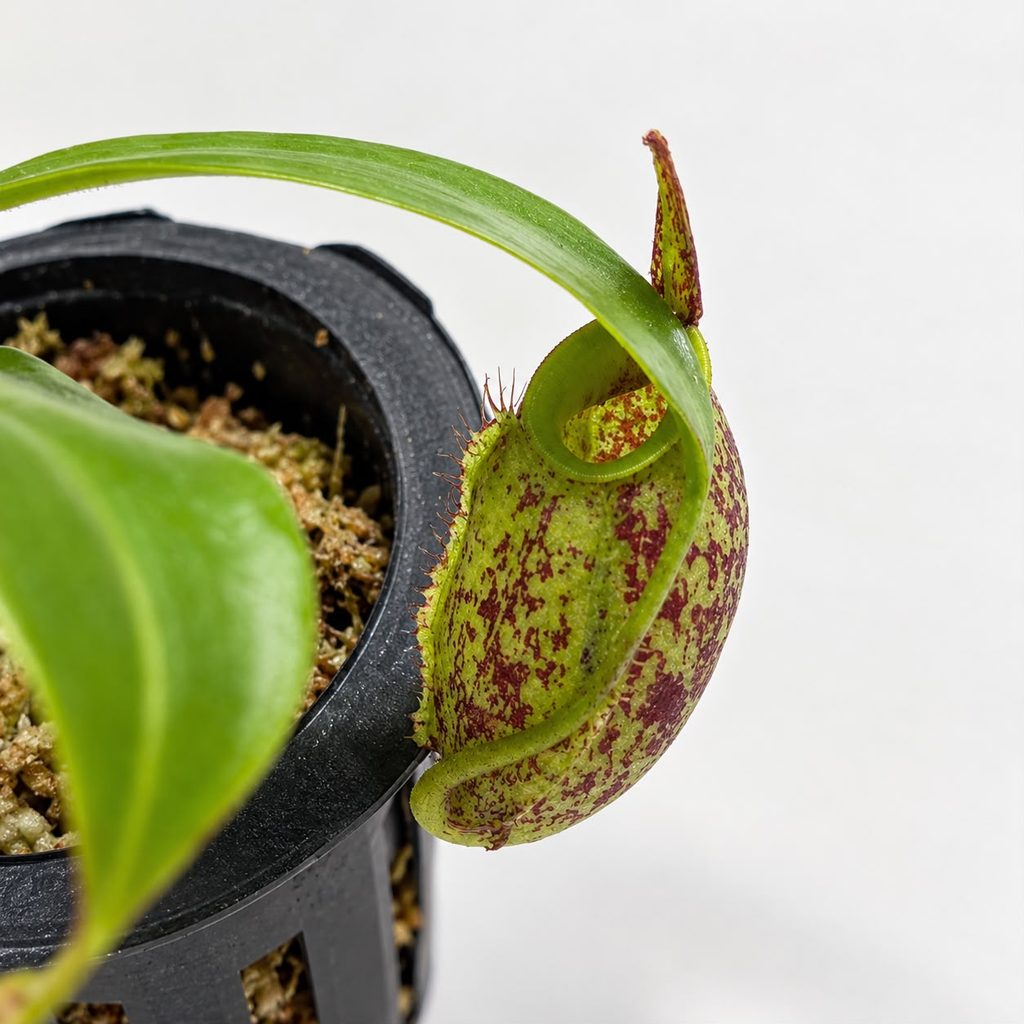
Every Nepenthes follows the same life pattern. A young plant starts as a low rosette of leaves, then matures into a climbing vine. As it climbs, the tip of each leaf extends into a tendril, and some tendrils form the pitchers that make the plant famous. Different species grow pitchers in very different shapes and colors.
Where Do Nepenthes Species Come From?
Nepenthes grows across a huge arc of the Old World tropics. Species live in Madagascar and the Seychelles, in India and Sri Lanka, throughout Southeast Asia, and as far as northern Australia and New Caledonia. The most widely distributed species, Nepenthes mirabilis, even grows in disturbed ground like roadsides and cleared forest.
Two islands stand out as hotspots. Borneo holds the greatest diversity of all. Sarawak alone records 21 species, and the Sarawak Forest Department notes that many of them stay confined to specific sites. Sumatra comes second, with around 38 to 39 recorded species, and researchers report that roughly 34 of them grow nowhere else.
That detail matters. Most Nepenthes species have small, specialized ranges, so one species may live on a single limestone hill or mountain slope. The genus as a whole is not endemic to any one island, but individual species often are.
Lowland, Intermediate, or Highland: The Key to Care
Growers sort Nepenthes by the altitude where each species lives, and this one label predicts most of its care needs.
- Lowland species grow near sea level in hot, humid forest. They prefer warm temperatures that stay fairly steady day and night, roughly 25 to 32°C. Their pitchers often come out large and colorful, striped or speckled in red, pink, yellow, or green.
- Intermediate species sit between the two and tolerate a wider range of conditions.
- Highland species grow in cool mountain forest above about 1,200 meters. They enjoy warm days but need noticeably cooler nights. The record holder, Nepenthes lamii, grows as high as 3,520 meters above sea level.
A lowland species kept cool will sulk and stop producing pitchers. A highland species kept hot and flat all night will struggle to survive. Matching the plant to its altitude group is the single most useful thing you can do.
Species or Hybrid? Know What You Bought
Many Nepenthes sold in shops are not wild-type species at all. They are cultivated hybrids, bred or selected because they grow faster, tolerate more mistakes, and produce pitchers reliably indoors. Nepenthes ventrata, a cross between N. ventricosa and N. alata, is a well-known example and a popular first Nepenthes for exactly that reason.
Hybrids usually adapt to a wider range of conditions than pure species, which makes them a forgiving place to start. Pure species, especially highland ones, tend to be fussier and more expensive. Check your plant’s label or ask the seller, because the name tells you which care rules to follow.
Light
Most Nepenthes want bright light. Many thrive with a few hours of gentle direct sun or strong grow lights running 10 to 12 hours a day. Too little light is the most common reason a healthy-looking plant never forms pitchers, while sudden exposure to harsh midday sun can scorch the leaves. Increase light gradually and watch the foliage.
Water and Humidity
Nepenthes evolved in nutrient-poor places, so minerals in tap water build up in the pot and eventually harm the roots. Use rainwater, distilled water, or other low-mineral water, and keep the medium evenly moist without letting it sit in a stagnant puddle.
Humidity needs depend on the group. Lowland species and many hybrids enjoy moderate to high humidity, and a terrarium, greenhouse, or humid grow cabinet helps them produce better pitchers. Some hybrids adapt to ordinary room humidity, but pitchers form more reliably when the air stays humid.
Growing Medium
Think airy and low in nutrients. Common mixes combine sphagnum moss, peat or coco fiber, perlite, and orchid bark. The medium should hold some moisture while letting air reach the roots. Avoid regular potting soil with added fertilizer, because it burns sensitive Nepenthes roots.
Feeding
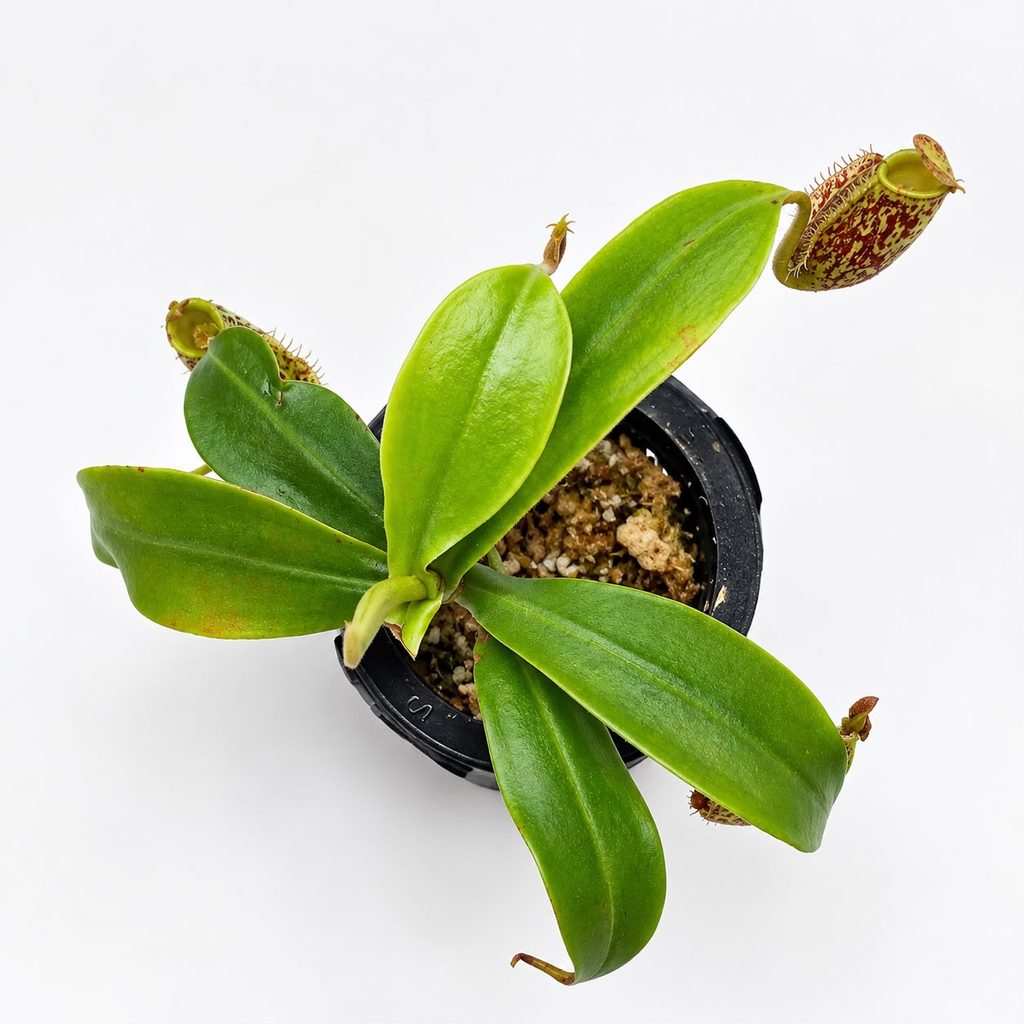
A Nepenthes catches its own food, and the plant needs very little help. If your plant lives indoors where few insects reach it, you can drop a small insect into a pitcher once in a while, but never overfeed. Do not pour fertilizer into the pitchers or the pot unless you know exactly what you are doing.
Common Problems
- No pitchers forming: usually a sign of too little light or too little humidity.
- Pitchers turning brown: a single old pitcher browning and drying is normal aging, so only worry if new pitchers keep dying young.
- Leaf tips browning: often caused by mineral-heavy water or very dry air.
- Stalled growth in a lowland species: check that nighttime temperatures are not dropping too low.
Why Nepenthes Rewards Patient Growers
A healthy Nepenthes gives you the most dramatic foliage a houseplant can offer, and it teaches you to read a plant instead of just watering it on a schedule. Learn which altitude group your plant belongs to, give it the matching light and water, and it will repay you with pitchers that look almost unreal.
If you are ready to add one to your collection, browse our current carnivorous and tropical plants in the shop.
Nepenthes is not one plant but a whole genus of very different plants, from hot lowland swamps to cold misty summits. Once you understand that range, your Nepenthes stops being a mysterious, difficult plant and becomes a plant with clear needs you can meet.
BORNEO AQUATIC Growing plants. Connecting people. Giving back to nature.