Bucephalandra Care Guide: Tips for Healthy Plants
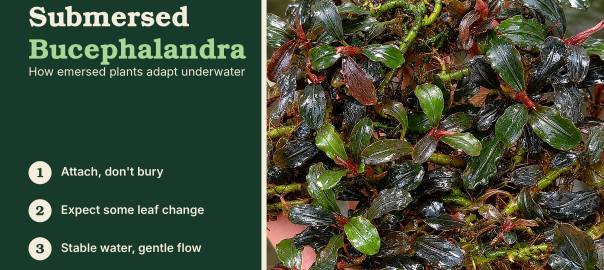
Bucephalandra are small, slow-growing aroids with glossy leaves and a soft shimmer under light. This Bucephalandra care guide shows you how to keep them healthy in an aquarium or aquascape. These plants are native to Borneo, where they grow on rocks along streams, so a few simple habits copy their natural home.
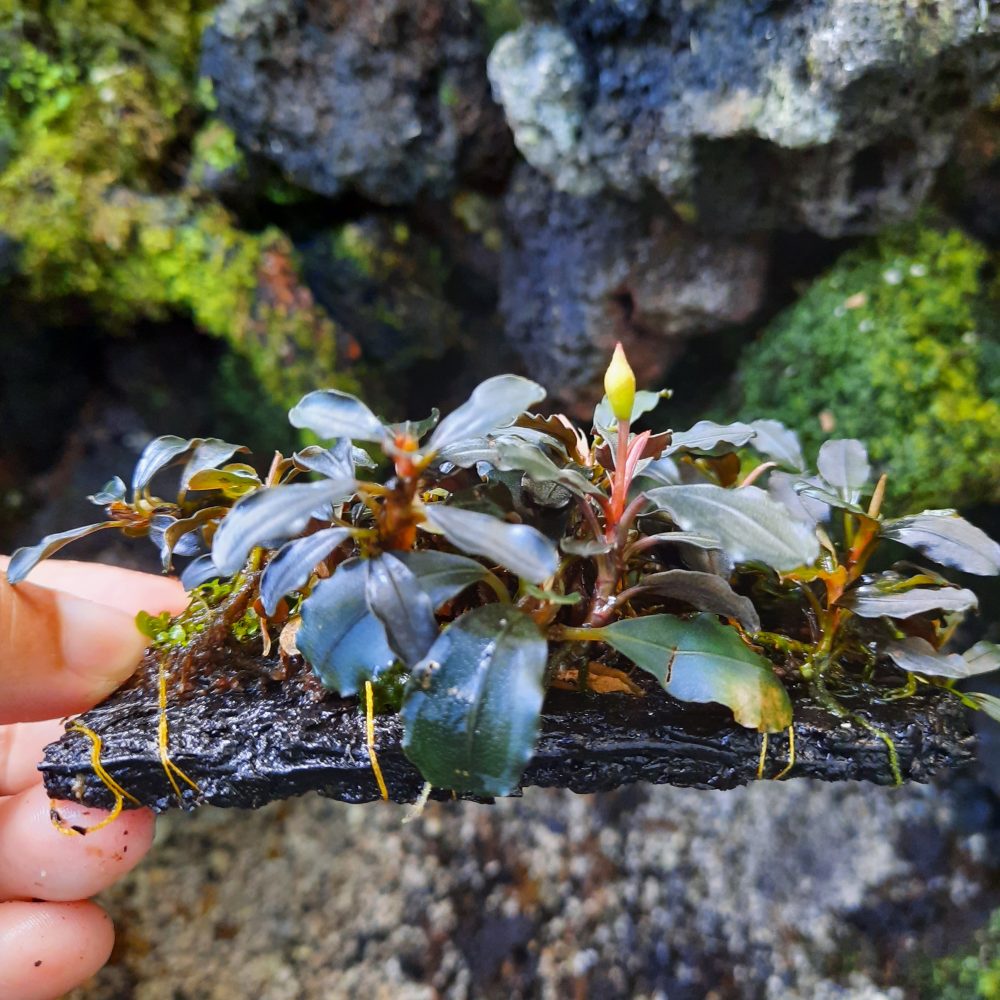
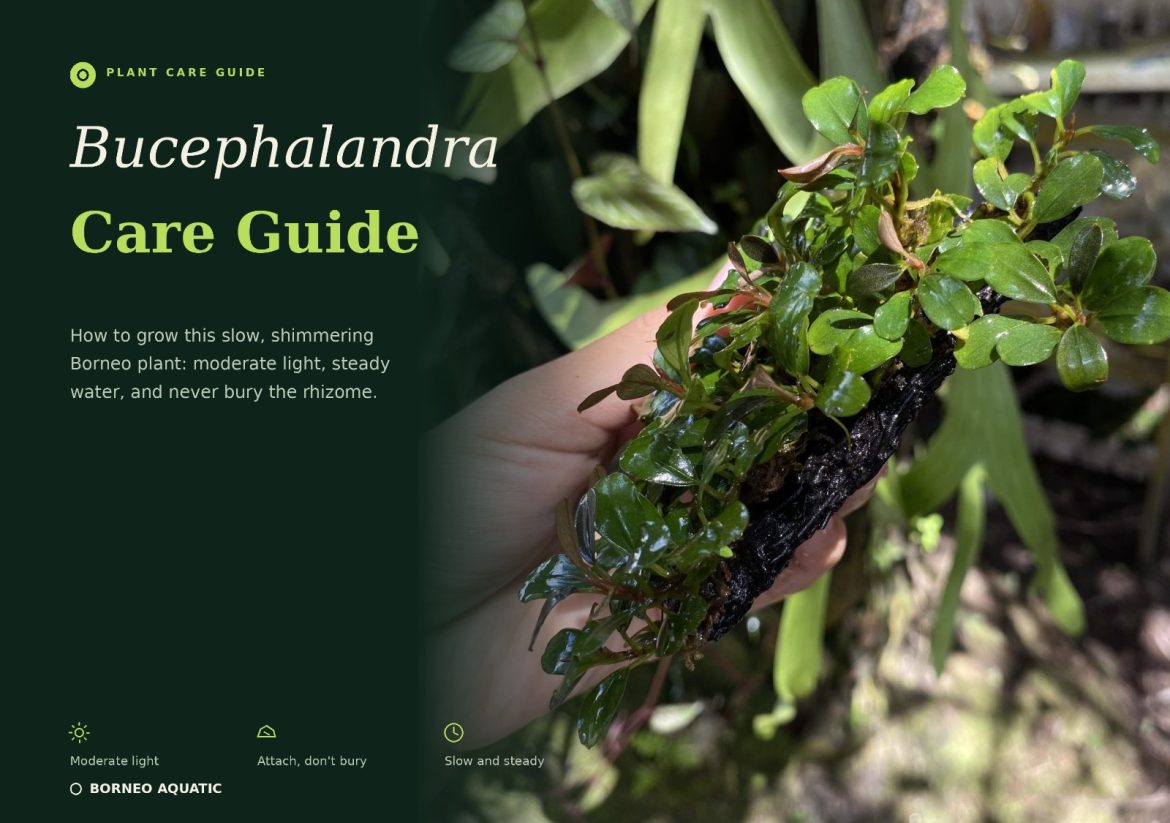
Alt text: bucephalandra care guide showing a healthy bucephalandra on pakis wood
Understand How Bucephalandra Grow
Bucephalandra belong to the Araceae family. They creep along a rhizome, the thick stem that runs sideways, and send up leaves from it. In nature, they cling to stones and boulders in flowing water. That is why they like to sit on hardscape instead of in the substrate.
Attach, Don’t Bury
The most important step in any Bucephalandra care guide is placement. Tie the rhizome to a rock or piece of wood with cotton thread, or glue it on with aquarium-safe gel glue. Keep the rhizome above the substrate, because buried rhizomes tend to rot. Roots will grip the surface in time, and you can then remove the thread.
Light and Algae
Bucephalandra grow well in low to moderate light. Strong light pushes algae to grow on their slow leaves, and algae is the most common complaint with these plants. Start with gentle lighting, watch the leaf surface, and raise the light only if the plant looks pale or stretched.
Water and Flow
Stable water matters more than perfect water. Change water on a regular schedule, and avoid sudden swings in your tank. Gentle to moderate flow carries food to the leaves and keeps debris off them, much like a stream does. Your Bucephalandra will thrive in a clean tank with steady conditions.
Feeding Your Plants
Bucephalandra take up nutrients through leaves and roots, and they grow slowly, so they need little. A light liquid fertilizer is enough in most tanks. CO2 is optional, and plenty of keepers grow these plants without it.
What to Expect After a Move
Moving to a new tank can stress any plant. You may see some old leaves melt in the first weeks while the plant adapts. Leave the rhizome alone, keep conditions steady, and new leaves will appear. Patience pays off with slow growers like these.
Choose Your Next Plant
When you feel ready to add more texture to your tank, explore our Bucephalandra clump plants at Borneo Aquatic. [ISI: sebut 2-3 varian yang ready stock, kalau mau] To read more about the genus and its natural habitat, see the Bucephalandra page on Wikipedia.
Show Image
Alt text: close-up of bucephalandra leaves with iridescent shimmer
BORNEO AQUATIC
Growing plants. Connecting people. Giving back to nature.