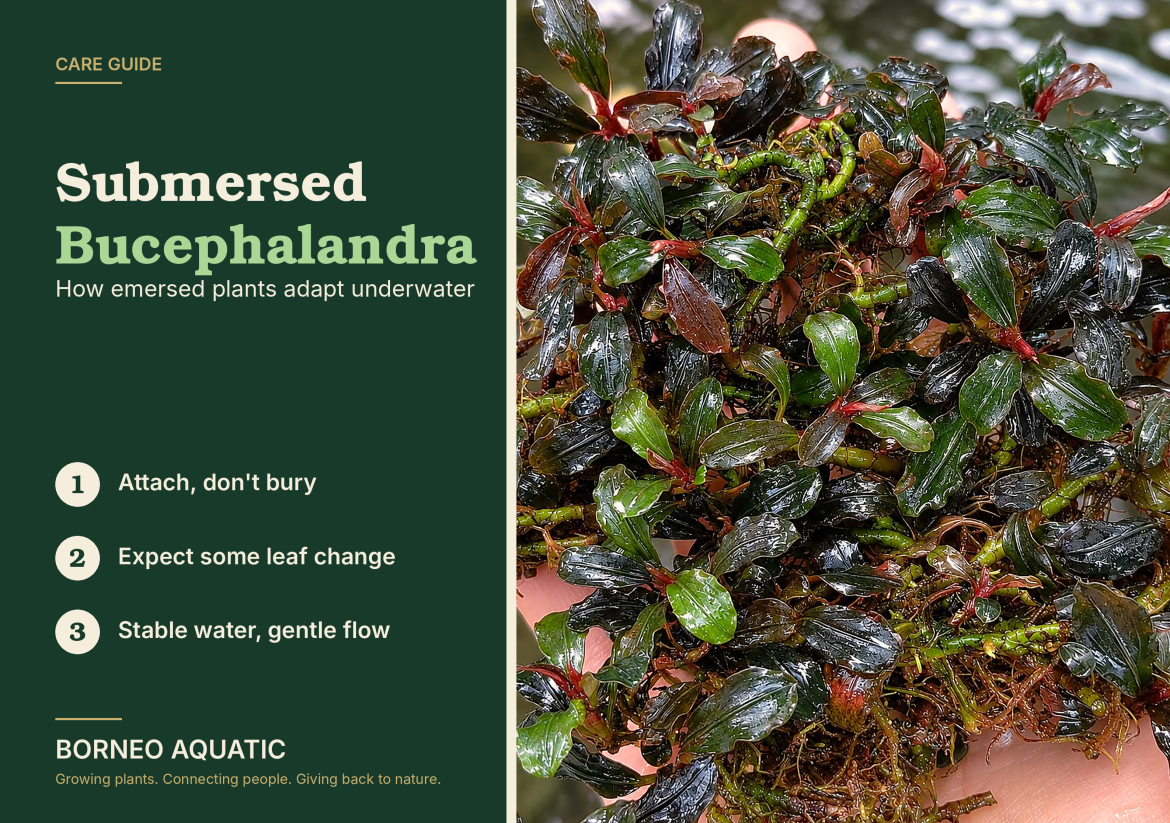
Submersed Bucephalandra: What It Is and How to Grow It
Submersed bucephalandra are plants that grow with their leaves fully underwater. If you keep Bucephalandra, you will meet both submersed and emersed plants sooner or later. This guide explains what the two forms mean, why leaves change after a move, and how to help your plants settle in.
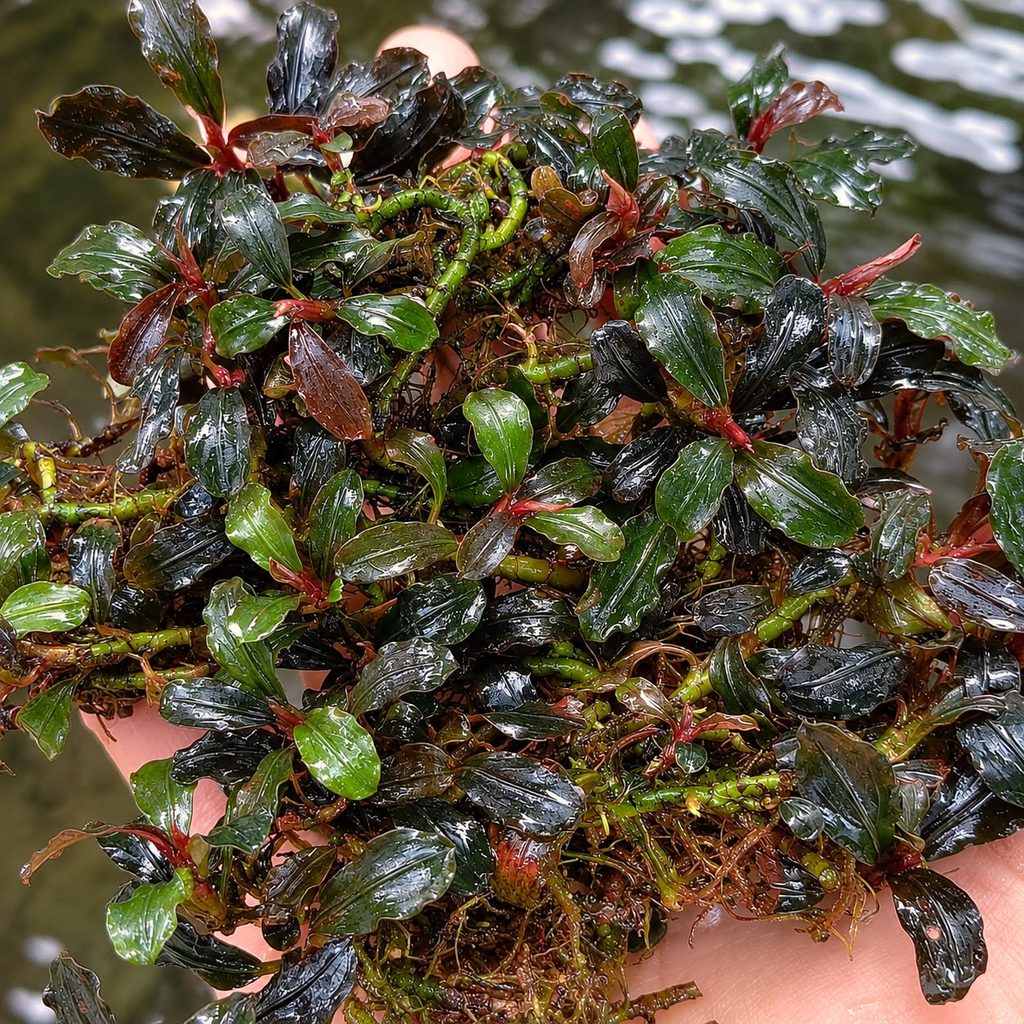
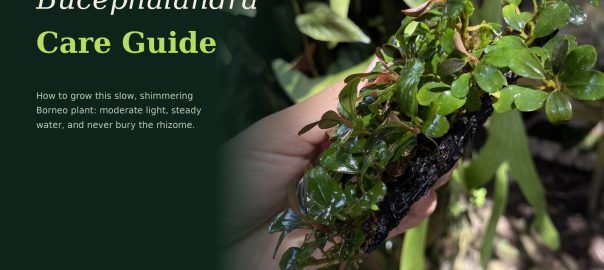
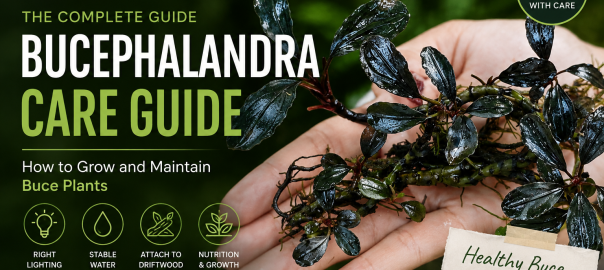
Submersed bucephalandra growing underwater on a rock in an aquarium
What Are Bucephalandra?
Bucephalandra belong to the arum family, Araceae, within the tribe Schismatoglottideae. The name comes from Greek words meaning “bull” and “head,” and it refers to the shape of the male flowers. Botanists recorded the described species in Borneo, where the plants grow on rocks beside and in streams. A 2014 revision by Wong and Boyce took the genus to 27 species, and that study in Willdenowia also matched scientific names with the names suppliers use.
Emersed vs Submersed: What Is the Difference?
An emersed plant grows with its leaves in the air, often in a humid setup. A submersed plant grows with its leaves underwater. Bucephalandra live on rocks in flowing water, so they cope with both conditions. Each form has its own leaf look and feel, and the same plant can show both over time.
Why Leaves Change Underwater
Botanists call this ability heterophylly, which means one plant makes different leaf forms in different environments. Research on amphibious plants shows that they build new leaves that suit the water or the air. A review of amphibious plants explains that underwater leaves tend to be thinner, with a thinner cuticle and fewer stomata, which helps them exchange gases in water.
What does this mean for your tank? When you place an emersed plant underwater, it may drop some old leaves and grow new ones. Many keepers see old leaves melt in this phase. The rhizome, the thick creeping stem, stays alive, so do not throw the plant away. Leaf shape and shine can also look different once the new leaves appear.
Why Names Can Confuse You
Shops often sell Bucephalandra under trade names, and those names do not always match scientific names. A 2020 study from Universitas Andalas looked at plants in Jakarta aquatic markets and found repeated confusion over the local names. So when you buy, ask the seller what the plant looks like and how it was grown, not only what it is called.
Submersed Bucephalandra Care Tips
These habits suit most Bucephalandra, and they help new submersed plants most.
- Attach it to hardscape. Tie the rhizome to a rock or wood with thread, or use gel glue. Keep the rhizome above the substrate so it does not rot.
- Keep light gentle. Low to moderate light helps you avoid algae on slow leaves.
- Keep water stable. Avoid big swings, and change water on a steady schedule.
- Give gentle flow. Light movement carries nutrients and keeps leaves clean, like a stream does.
- Trim dead leaves. Remove melted leaves so they do not foul the water, and leave the rhizome in place.
- Be patient. Bucephalandra grow slowly, so avoid moving the plant again and again.
Get Submersed Bucephalandra From Us
Browse our Bucephalandra clump plants at Borneo Aquatic to see what we have right now. We also offer submersed bucephalandra with leaves already grown underwater. [ISI: cek apakah stok memang limited] Stock is limited, so these plants sell out quickly. If you want to reserve one, email us at [ISI: alamat email] or contact us through [ISI: link halaman kontak / WhatsApp / Instagram], and we will tell you what is available.
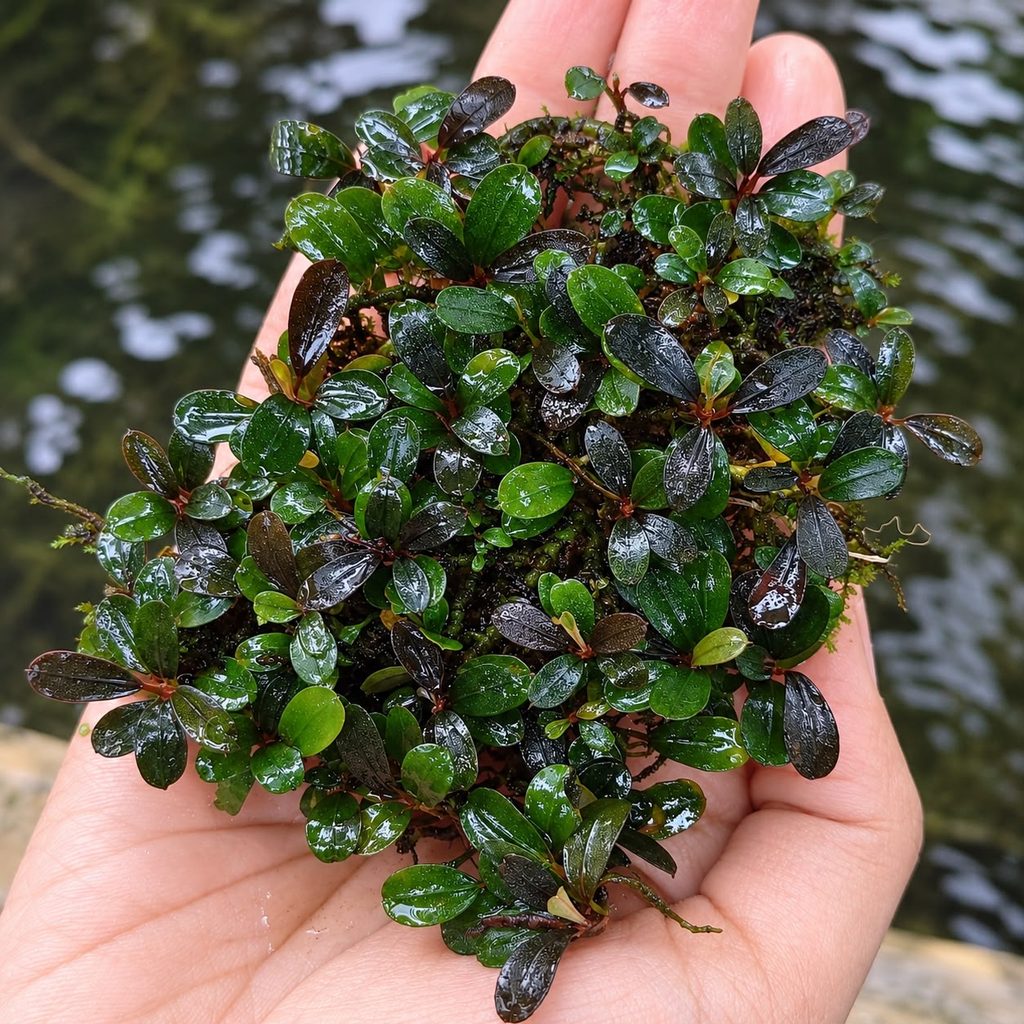
Bucephalandra new leaves growing from the rhizome after adapting underwater
BORNEO AQUATIC
Growing plants. Connecting people. Giving back to nature.